
The full range
Bandsaw blades: every construction, compared honestly
From carbon steel and bi-metal to carbide-tipped: the blades we sell, compared by construction, with every band welded to the length your machine takes.
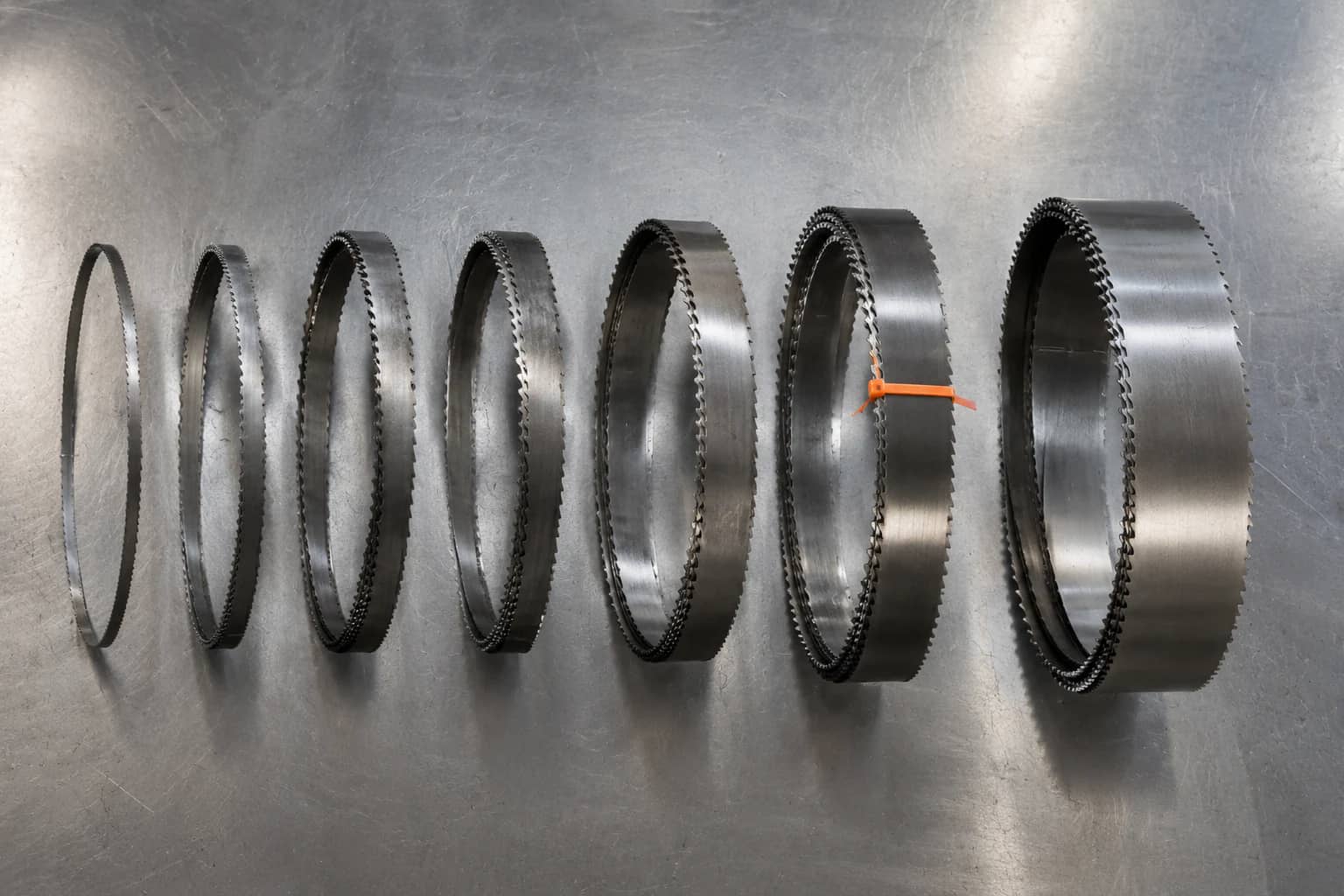
How to choose a bandsaw blade construction
Every bandsaw blade balances edge hardness, body toughness and cost, and the construction sets that balance before any other choice you make. Carbon steel blades are the economical workhorse: a hardened carbon body cuts wood, panel products, plastics and softer non-ferrous metals cleanly, and costs little enough to change often. Bi-metal blades weld a high speed steel tooth edge onto a fatigue-resistant alloy backing, which keeps the edge hard at the temperatures steel cutting generates. That is why bi-metal is the default in fabrication and engineering shops.
Carbide-tipped blades carry tungsten carbide tips for the alloys that stop bi-metal: titanium, nickel-based high-temperature alloys and hardened tool steels. Whatever the construction, we weld every band to the loop length your machine takes. Setup matters as much as the blade: tension and band speed, covered under bandsaw accessories, and cutting fluid all change how long an edge lasts.
The full category directory
Every category in the shop, one table. Each category name links to its full guide with products, materials guidance and buying advice.
| Category | Construction | Typical materials | Brands we supply |
|---|---|---|---|
| Carbon Steel Blades | Hardened carbon steel body and teeth, no alloy tip | Softwood, Hardwood, Chipboard, MDF, Plastics and Non-ferrous metals | Dakin-Flathers |
| Bi-Metal Blades | HSS tooth edge welded to a flexible alloy steel backing | Structural steel, Mild steel, Stainless steel, Tool steel, Aluminium, Brass, Copper and Cast iron | Bahco, Morse and Lenox |
| Carbide-Tipped Blades | Tungsten carbide tips on an alloy backing, some further coated | High-temperature alloys, Titanium, Tool steel, Cast iron, High-silicon aluminium and Large or difficult sections | Bahco and Morse |
| Cutting Fluids | Soluble cutting fluid concentrate, mixed with water | Metals cut with coolant | Rods Oil |
- 26blade products in the range
- 3 to 67mmpublished band widths
- Made to orderevery band welded to your length
- UKdelivery to UK addresses
Blades at work
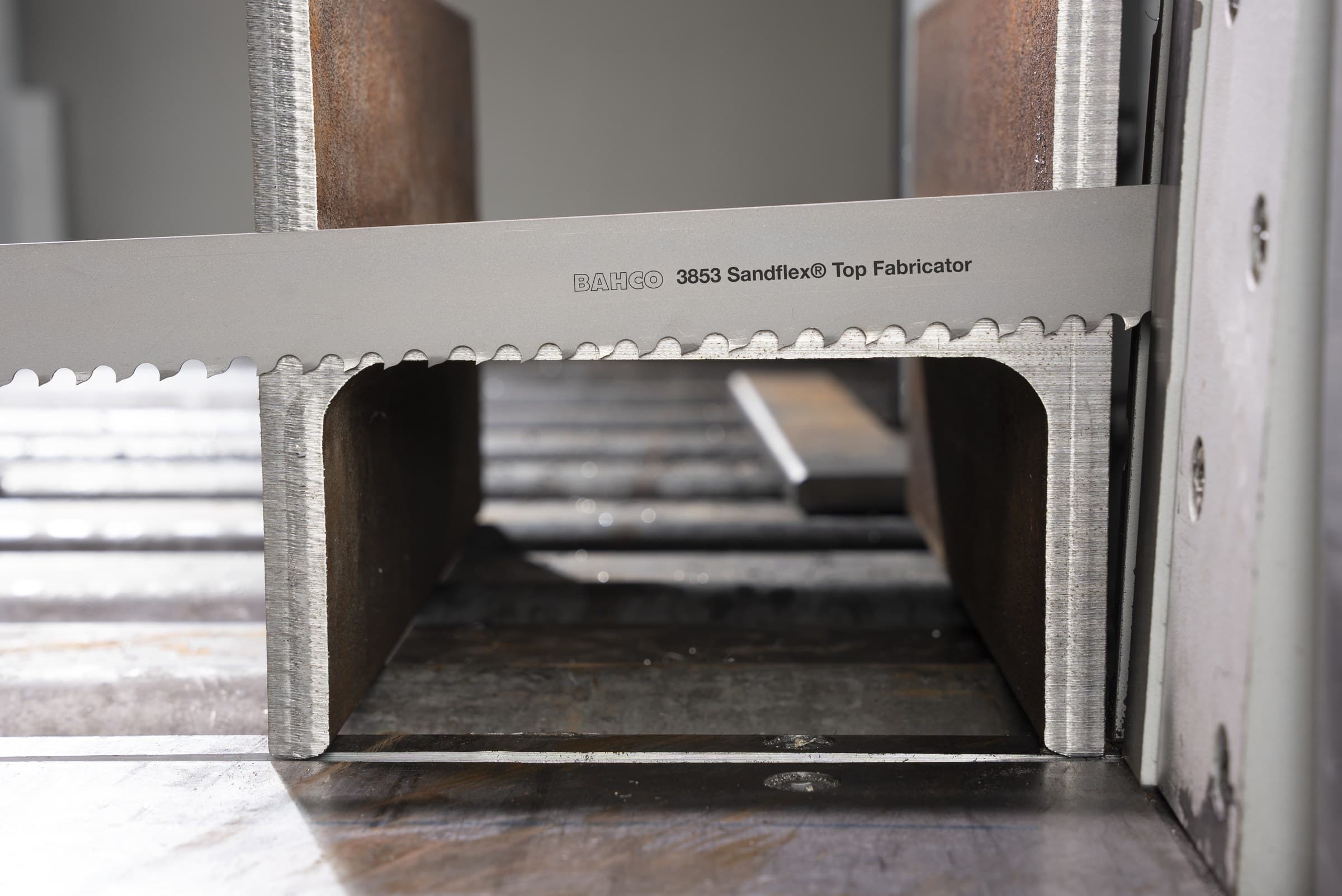
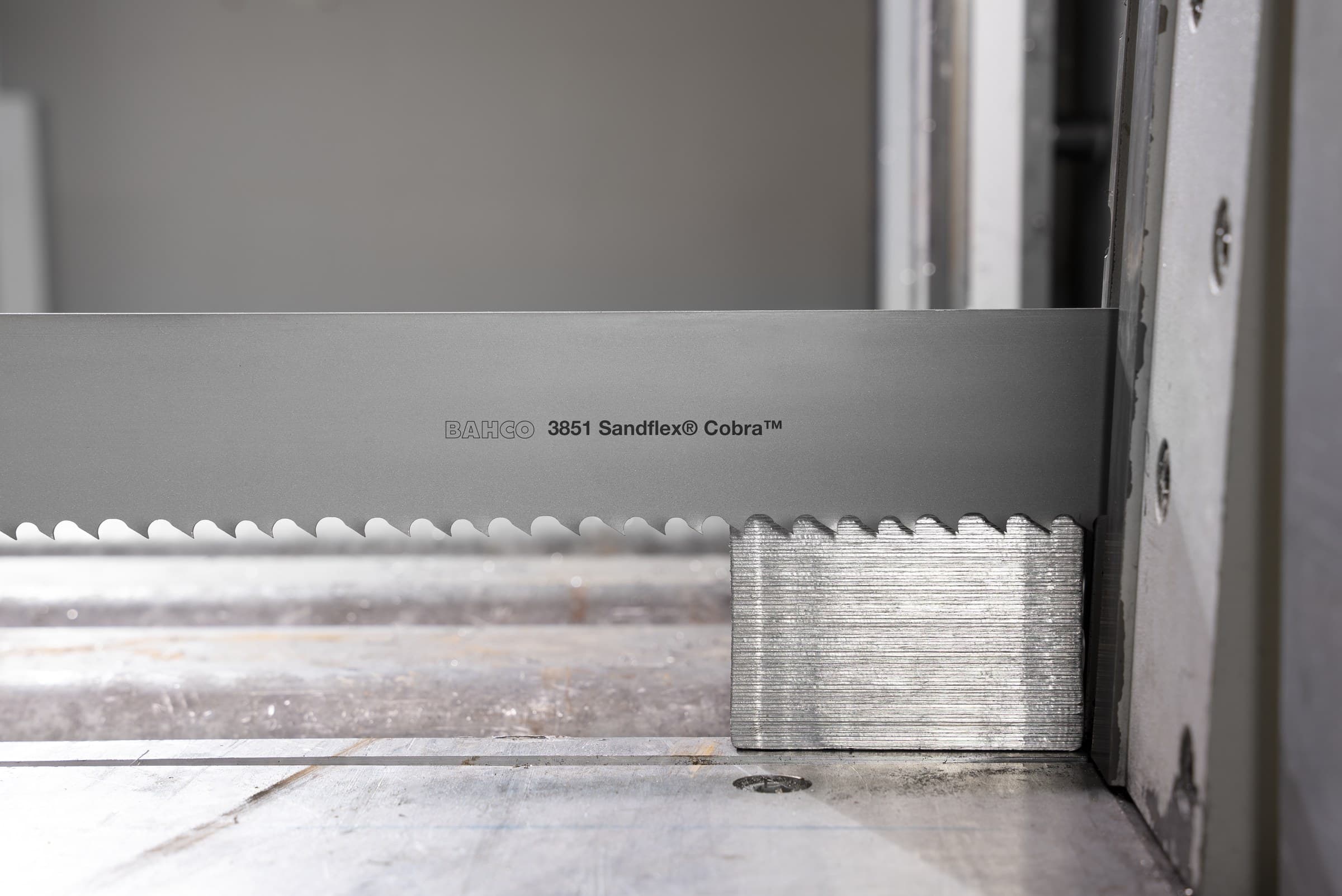
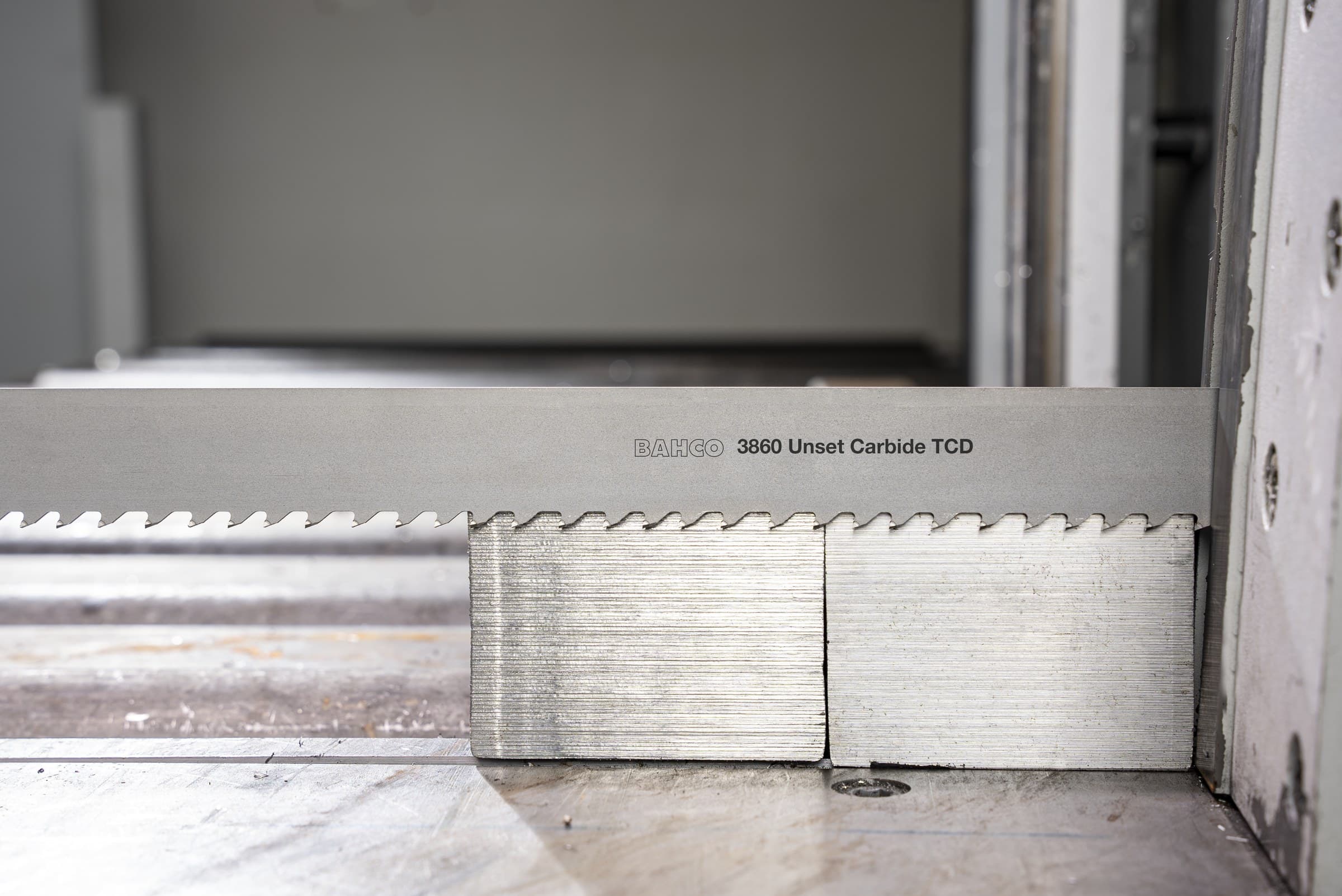
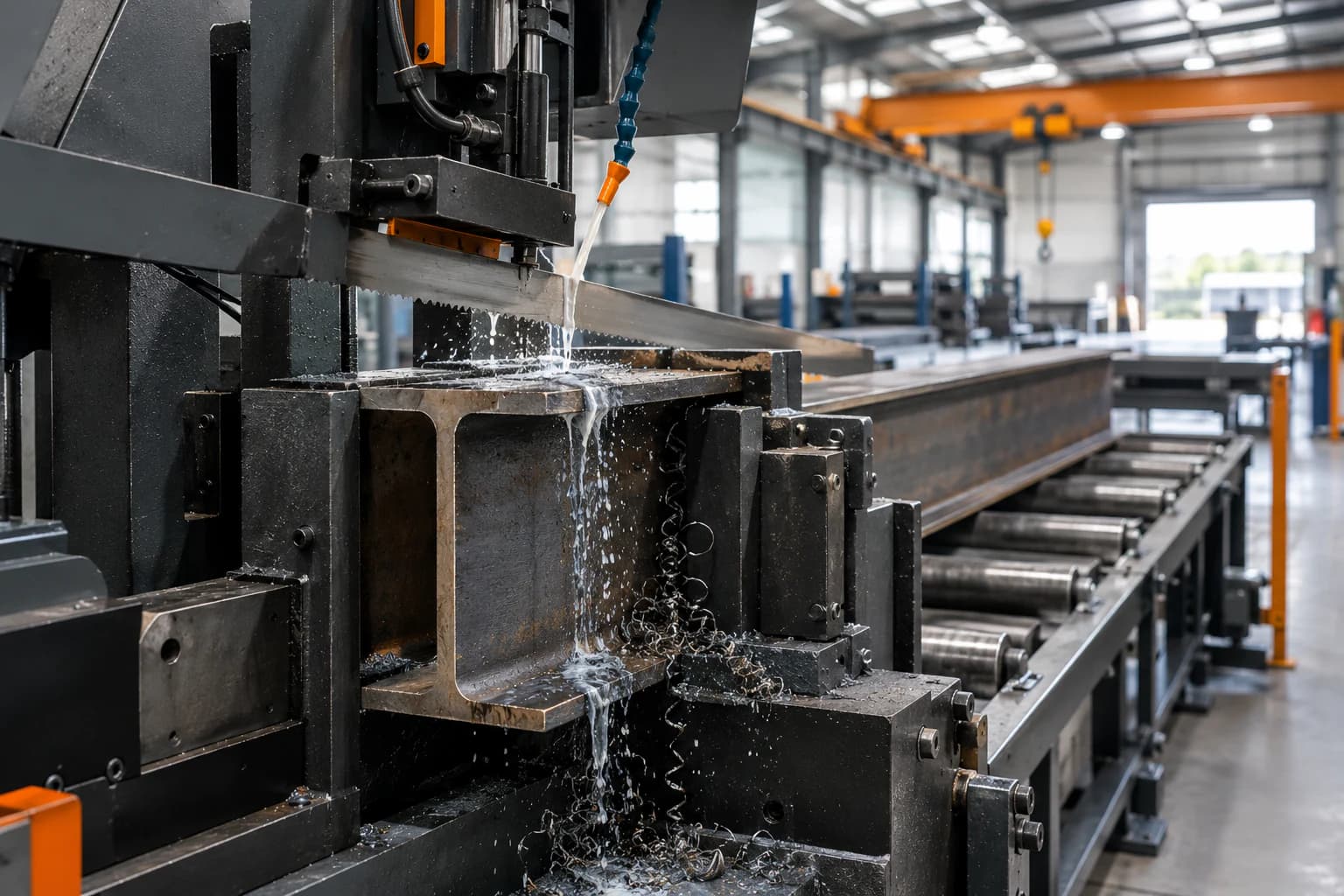
Bahco blades cutting solid steel.
What the range cuts
A representative spread from timber to titanium. Material names link to our in-depth cutting guides where one exists.
| Material | Cutting guidance |
|---|---|
| Hardwood | Carbon blades cover general ripping and cost little enough to change often. Keep the pitch coarse enough for deep rip cuts to clear. |
| MDF and Chipboard | Treat resin-bonded panels as abrasive: the glue line dulls edges faster than the wood fibre. Fine, consistent carbon pitches give clean panel edges at sensible blade cost. |
| Mild Steel | Bi-metal is the default. The real decision is pitch: coarser for solid bar, finer for thin wall and profiles, always keeping between 4 and 24 teeth in the cut. |
| Stainless Steel | Stainless work hardens the moment a tooth rubs instead of cuts, so keep feed positive from the first pass. High-performance bi-metal covers most sections; carbide takes heavy or high-nickel work. |
| Aluminium | Soft alloys pack gullets while high-silicon castings wear edges like sandpaper. Go coarse to keep swarf moving and watch for tooth loading before it shows up as a wandering cut. |
| Titanium | Low thermal conductivity concentrates heat at the tooth tip, which is where ordinary edges fail. Carbide-tipped blades, moderate band speed, positive feed and generous coolant keep the tips alive. |
Tooth pitch and band width: the general rules
Construction decides what a blade can cut; pitch and width decide how well it cuts it. These rules hold across every category, and variable pitch bands exist precisely to cover mixed section sizes without a blade change.
Count teeth in the cut
Aim for between 4 and 24 teeth engaged in the workpiece at any moment. Fewer and each tooth takes too big a bite and can strip; more and the gullets pack with material before they clear the cut.
Go coarser for deep and soft
Deep sections and soft, gummy materials need big gullets to carry material out of the cut. If the blade slows and the swarf compacts, the pitch is too fine for the job.
Go finer for thin and hard
Thin wall tube, profiles and sheet need more teeth sharing the load so no single tooth hooks an edge. Harder materials also favour finer pitches and steadier feed.
Fit width to machine and cut
Run the widest band your machine can tension properly for straight, deep cuts: wider bands resist deflection. Drop width where the work curves or the wheels are small.
Range highlights
One blade from each range to start from. The shop pages list every product, each welded to the length you order.
Dakin-Flathers Saw37C
Saw37C Flex Back Carbon Bandsaw Blade
- Widths
- 3 to 32mm
- Thickness
- 0.65 to 1.1mm
- TPI
- 2 to 32
- Tooth forms
- Hook, Regular and Skip
ConfigureFrom £10.93 ex VAT
From £13.12 inc VAT
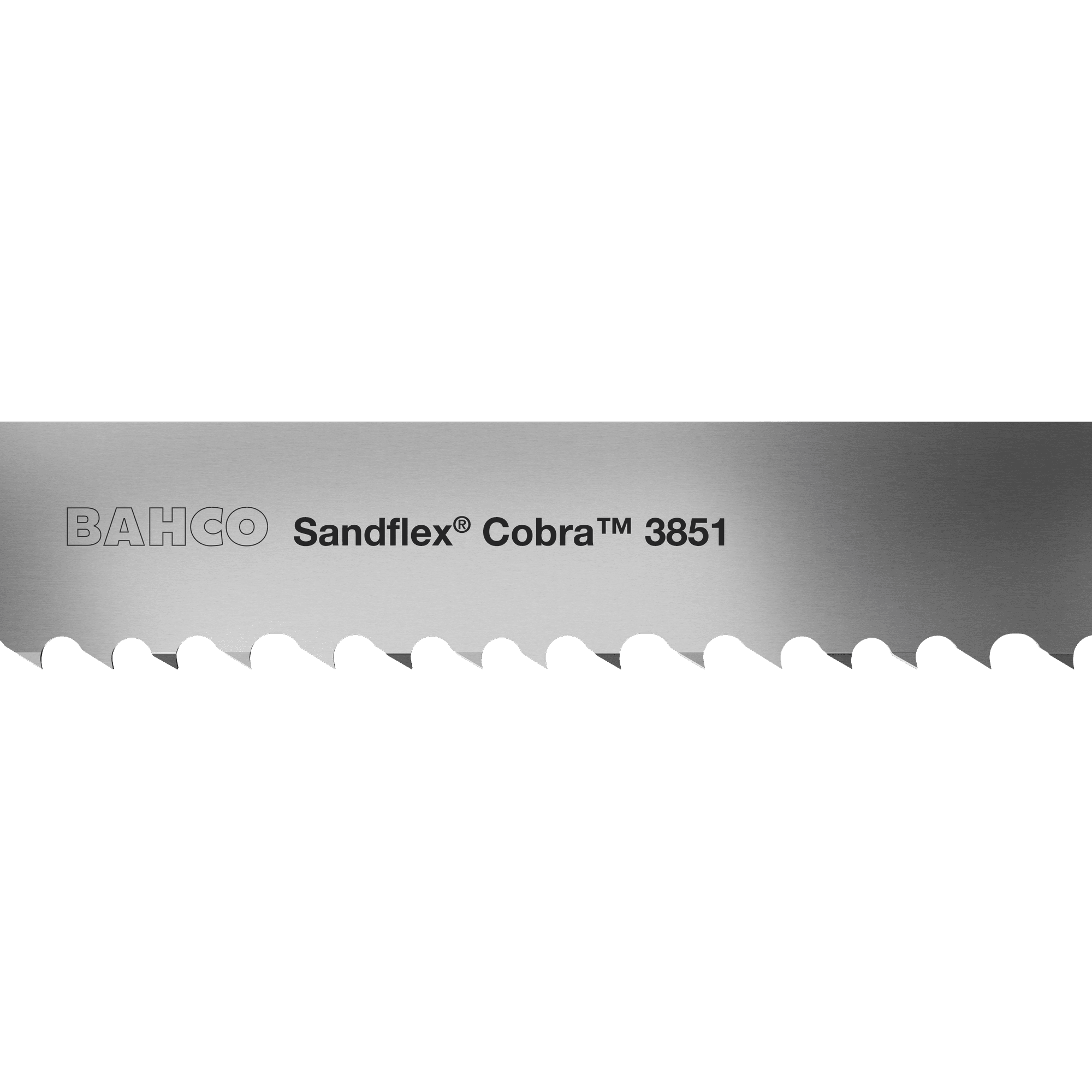
Bahco 3851
3851 Sandflex Cobra PRX Bandsaw Blade
- Widths
- 27 to 67mm
- Thickness
- 0.9 to 1.6mm
- TPI
- 0.7/1 to 10/14
- Tooth form
- PRX
ConfigureFrom £13.12 ex VAT
From £15.74 inc VAT
Bahco 3860
3860 TMC TMC Bandsaw Blade
- Widths
- 41 to 67mm
- Thickness
- 1.3 to 1.6mm
- TPI
- 0.7/1 to 2/3
- Tooth form
- TMC
ConfigureFrom £38.87 ex VAT
From £46.64 inc VAT
Where these blades work
Every industry guide maps its daily cutting mix onto the categories above, with recommended blades for the work.
- Structural Steel, Fabrication and General Engineering
- Tool, Die and High-Temperature Alloys
- Stainless Steel Processing
- Non-Ferrous Metals and Foundry
- Timber and Sawmilling
- Joinery, Furniture and Wood Panel
- Pallet and Wood Recycling
Materials we cover in depth


From the blog
- All bandsaw blades
How to choose the right bandsaw blade TPI
What TPI means on a bandsaw blade, how the three-teeth rule sets the limits and honest starting-point pitches for common workpiece thicknesses.
 All bandsaw blades
How to set bandsaw blade speed and feed
How band speed and feed rate work together on a bandsaw, what the chips and the sound of the cut tell you and how speed follows the material family.
Frequently asked questions
How do I choose between carbon, bi-metal and carbide blades?
What does welded to your length mean?
How do I measure my bandsaw blade length?
When should I replace a bandsaw blade?
Tell the blade wizard your material and machine and it narrows the whole range to a shortlist.
Open the blade wizard