
Industry guide
Bandsaw blades that keep fabrication shops cutting
Fabrication shops live on their bandsaw. This page matches bi-metal and carbide blades to the daily mix of solids, box, tube and angle, each welded to your machine's loop length.
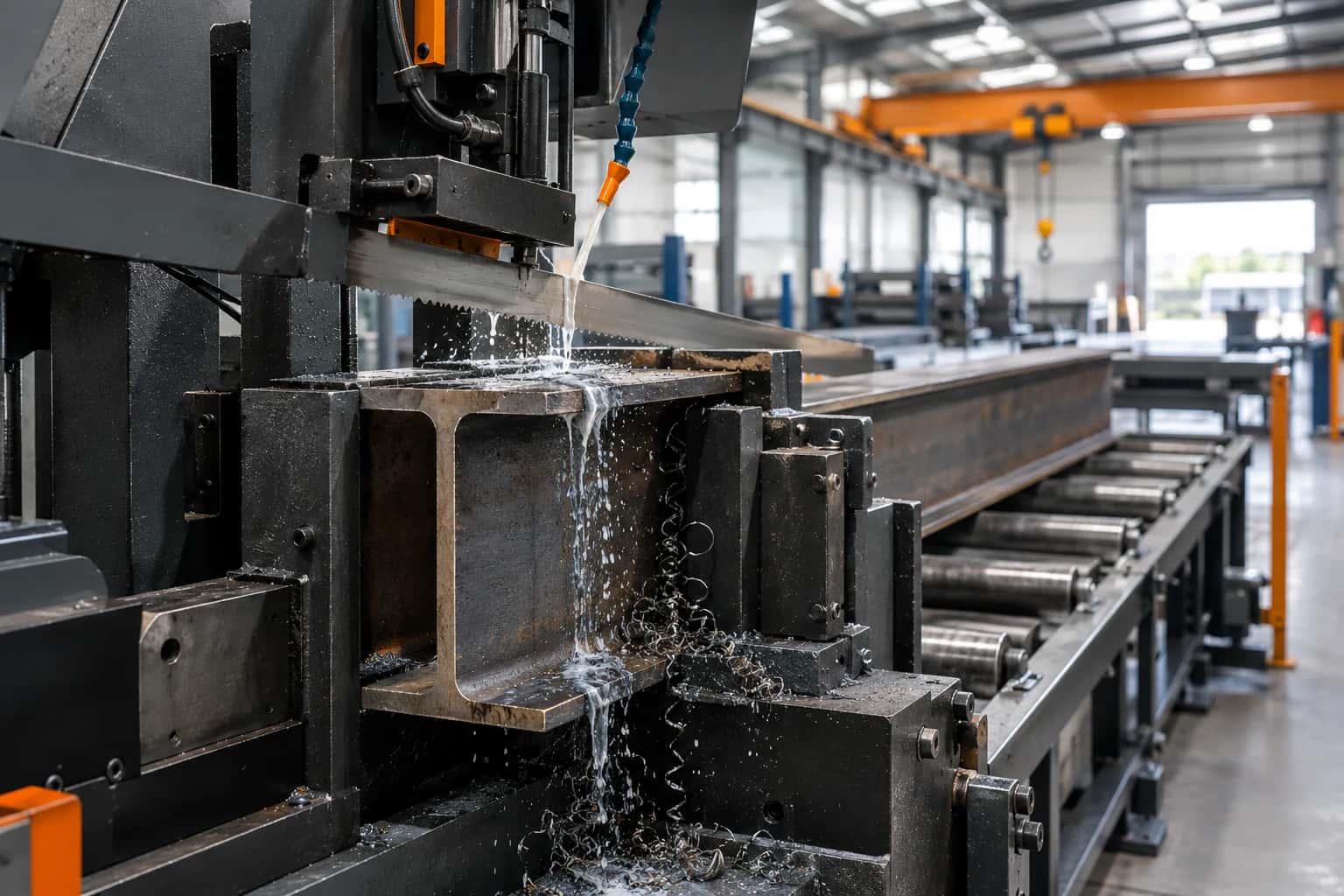
When the bandsaw stops, so does the shop. Steel fabricators, structural steelwork contractors and general engineering job shops all depend on one machine to feed everything downstream. The work it faces changes hour by hour: solid bar in the morning, box section and angle after lunch, a casting or a stainless offcut before the end of the day.
Bi-metal blades carry that mix. A high speed steel tooth edge welded to a flexible alloy steel backing keeps the teeth hard at cutting temperature while the band flexes around the wheels, cut after cut. Choose the right pitch for the section and a good bi-metal band covers the daily run of solids, tubes and profiles. When hard or abrasive sections start slowing the saw down, carbide-tipped blades step in.
Recommended blades for this work
Blades on sale today that suit this work, each with the reason from its own listing. Every one is welded to your machine's length.
Bahco
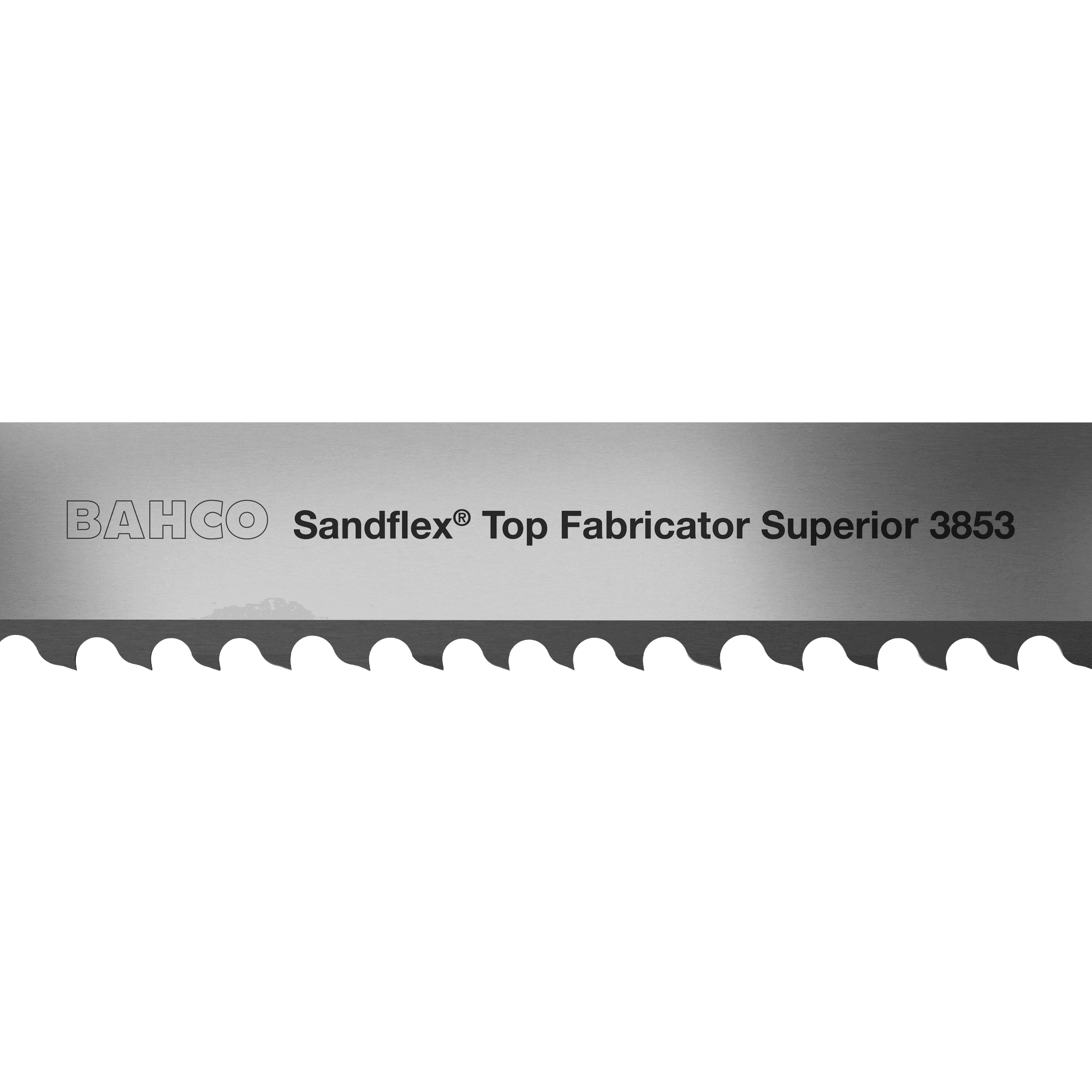
3853 Sandflex Top Fabricator PF Bandsaw Blade
Structural steel bi-metal blade for tubes, profiles and mitre cutting in fabrication shops.
From £15.77 ex VAT£18.92 inc VAT
Morse
Production M42 Bandsaw Blade
M42 cobalt HSS bi-metal blade for higher production speeds and heat resistance on alloy and stainless steels.
From £8.43 ex VAT£10.12 inc VAT
Morse
Challenger Bandsaw Blade
Structural bi-metal blade for interrupted and bundle cutting of I-beams, tube and channel.
From £13.21 ex VAT£15.85 inc VAT
Bahco
3857 Easy-Cut EZ Bandsaw Blade
Multipurpose Easy-Cut bi-metal blade for tool rooms, fabricating and welding shops.
From £11.79 ex VAT£14.15 inc VAT
Bahco
3859 EZX Extreme Easy-Cut EZX Bandsaw Blade
Easy-Cut Xtreme EZX trimetal blade for structural and stainless steel, cast iron, high-temperature alloys and tool steel.
From £28.55 ex VAT£34.26 inc VAT
Bahco
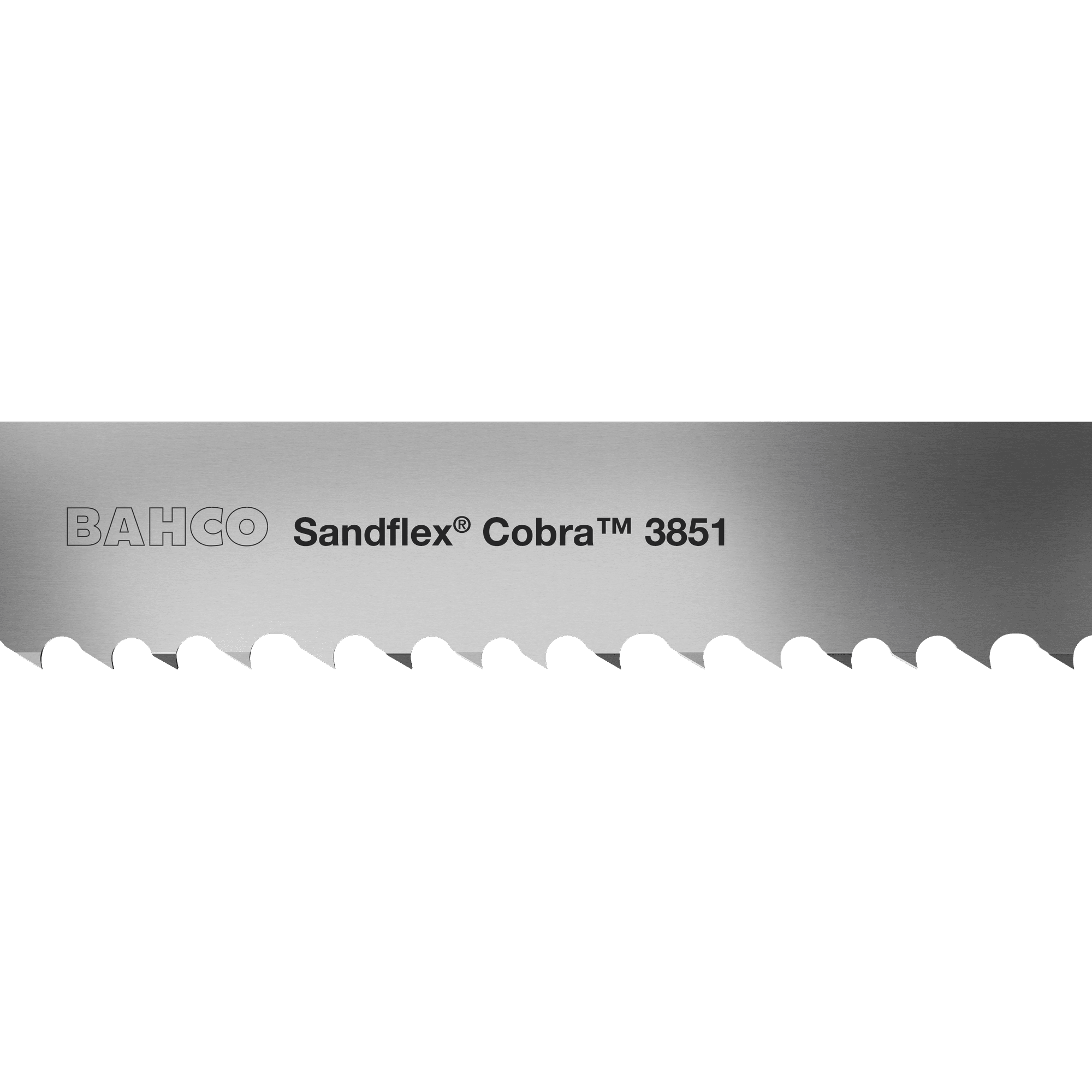
3851 Sandflex Cobra PRX Bandsaw Blade
Production bi-metal blade with an improved HSS tooth edge for high performance metal cutting.
From £13.12 ex VAT£15.74 inc VAT
Why bi-metal leads in fabrication
Bi-metal blades weld a high speed steel tooth edge, commonly M42 or M51, onto a fatigue-resistant alloy backing. The edge stays hard at cutting temperature while the backing flexes around the wheels without cracking, which is exactly what a saw running all day demands. That combination cuts everything from aluminium to stainless and tool steels, so one blade family covers the daily mix of solids, box, tube and angle. It is why bi-metal is the default in fabrication and engineering workshops.
Carbide-tipped blades carry tungsten carbide tips on an alloy backing (some further coated) and those tips stay hard far beyond HSS temperatures. Step across when the work stops a bi-metal blade or wears it out quickly: titanium, nickel-based high-temperature alloys, hardened and abrasive tool steels, high-silicon aluminium and demanding foundry work. In a fabrication shop that usually means the awkward jobs, large or difficult sections and castings that dull a standard blade quickly. For everything else, stay on bi-metal and spend the difference on the right pitch.
On the saw table
The workpieces this industry actually feeds through a band, and what each asks of the blade.
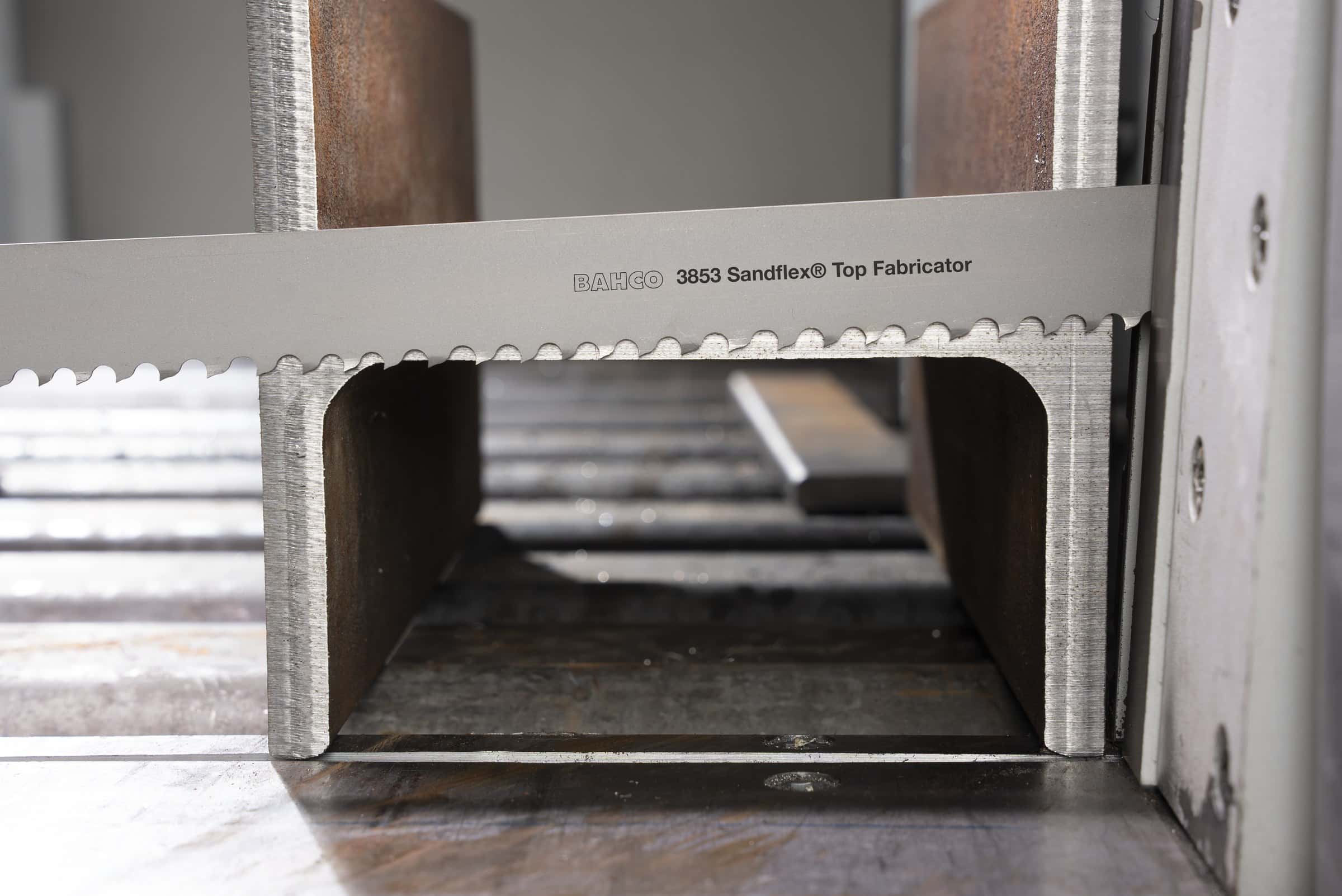
Box section and angle
Hollow sections and angle are interrupted cuts: the teeth enter and leave the material at every wall, which is what strips teeth off the wrong blade. A structural pitch on a bi-metal band, like the Sandflex Top Fabricator, is designed for exactly this duty, including the mitre cuts that connect a steel frame. Match the pitch to wall thickness rather than overall section size and the blade lasts.
Solid bar work
Solid bar keeps the whole tooth line in the cut, so the blade needs enough gullet to clear chips and enough beam strength to cut straight. This is where an M42 bi-metal band such as the Morse M42 earns its keep on everything from mild steel to alloy steel. If the same saw sees stainless bar, keep feed pressure positive: stainless work hardens under a rubbing tooth and punishes hesitation.
Castings and hard sections
Castings and hardened or abrasive sections are where a fabrication shop's bi-metal habit gets expensive: the blade cuts, but slower every hour, until the saw becomes the bottleneck. Hardened or abrasive cast iron and tool steel grades, along with high-temperature alloys, sit squarely in carbide territory. A trimetal blade like the Easy-Cut Xtreme EZX keeps carbide life on the difficult work without giving up the general purpose range the rest of the week demands.
Material guides for this industry


Deeper guidance per workpiece, including the blades that genuinely cut it and why.
From the blog
- Steel fabrication
How to set bandsaw blade speed and feed
How band speed and feed rate work together on a bandsaw, what the chips and the sound of the cut tell you and how speed follows the material family.
- Steel fabrication
How to choose the right bandsaw blade TPI
What TPI means on a bandsaw blade, how the three-teeth rule sets the limits and honest starting-point pitches for common workpiece thicknesses.
- Steel fabrication
Why bandsaw blades break and how to fix it
A diagnostic guide to premature bandsaw blade breakage. Read the failure signature, trace it to tension, wheels, guides or the weld and fix the cause.
Frequently asked questions
Can one blade handle everything a fabrication shop cuts?
Why do blades lose teeth on box section and angle?
How should we handle stainless sections alongside mild steel?
Tell the blade wizard your material, machine and length and it will narrow the range for you.
Start the blade wizard