
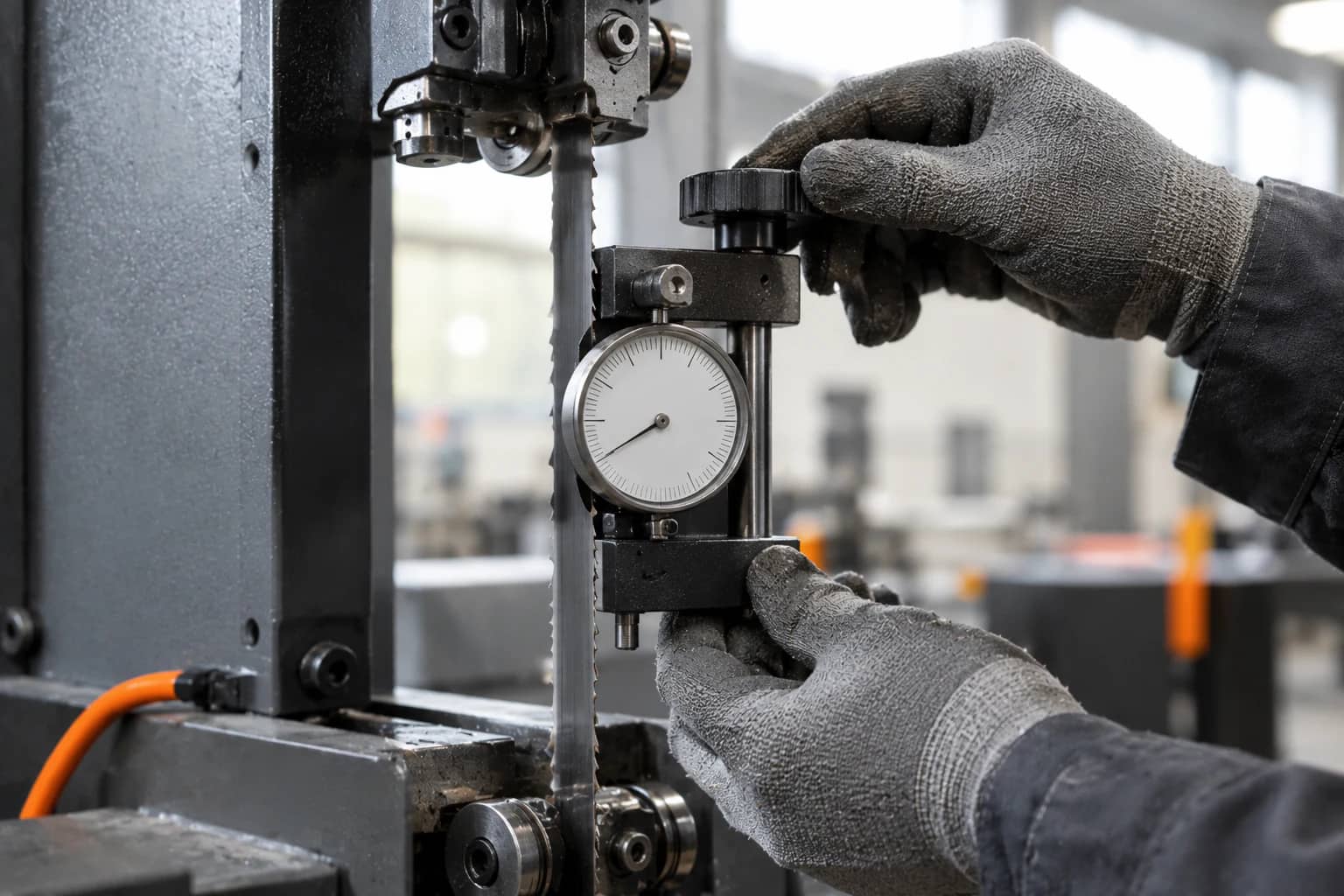
Blade setup and maintenance
Bandsaw accessories that keep blades cutting true
Tension meters, set checkers, chip brushes, a tachometer, a refractometer, steel wedges and grinding wheels: the sawing aids that make a machine run at the settings its blades were designed for. They are not in the online shop at the moment. Ask and we will come back to you.
Tension, band speed, tooth set and coolant: four settings worth measuring.
Setup is a specification, not a feel
Every blade we sell carries published figures: width, pitch and the loop length we weld it to. The machine it runs on has figures of its own, and the difference between a blade that reaches its potential and one that fails early is usually whether anyone measured them. Band tension, band speed, tooth set and coolant concentration all drift in service, and not one of them can be judged reliably by eye or ear.
The tools in this guide cover the measuring and maintaining side of bandsawing: tension meters and gauges that put a number on the band, a set checker for the tooth set that controls kerf and clearance, a tachometer for true band speed, a refractometer for coolant concentration, plus chip brushes, steel wedges and grinding wheels that keep bands clean, workpieces seated and resharpenable blades sharp. None of it cuts anything. All of it decides how well your bandsaw blades cut.
Blade tension, done properly
The single setting that most decides blade life, and the one most often set by feel. The ritual below is general workshop practice; the correct tension figure itself comes from your blade manufacturer and your machine, which is exactly why the meter matters.
Why tension comes first
An under-tensioned band wanders in the cut and fatigues at the weld. An over-tensioned band overloads the wheels, the bearings and the band itself. Every other setting on the saw is judged against a band running at its intended tension, so it gets checked before anything else.
Slacken, then re-tension
Make slackening part of the routine. Releasing tension while the saw stands idle rests the band and the wheels, and re-tensioning before work means the figure is set deliberately each time rather than inherited from whoever last touched the handwheel.
Measure with a meter, not by ear
Pluck tests and thumb deflection vary with the person, the band width and the day. A tension meter or gauge reads the actual figure on the band, so you can set what the blade manufacturer recommends and return to it exactly after every blade change.
Check tracking afterwards
Changing tension changes how the band sits on the wheels. After re-tensioning, confirm the band tracks where it should, re-set the guides if they were moved and prove the setup with a test cut in scrap before committing real work.
One measured figure beats ten opinions
Tension set by ear drifts a little with every blade change, and every drift is paid for in wandering cuts, early weld fatigue or overloaded bearings. A meter makes the setting repeatable for the life of the machine.
It is the first suspect when a blade breaks early, too: before blaming the band, the standard troubleshooting order is tension, tracking, guides and gullets.
What each accessory looks after
Accessories cut nothing, so instead of the materials table our blade categories carry, here is the honest version: the common accessories, what each measures or maintains and why that shows up in blade life.
| Accessory | What it measures or maintains | Why that protects blade life |
|---|---|---|
| Tension meter or gauge | Reads band tension when fitting a blade, so it is set to the recommended figure rather than by feel. Gauges also suit manually tensioned bandsaw and bandknife blades. | Correct tension keeps bands cutting straight and protects the weld and the machine. A measured figure lets you return to the same setting after every blade change. |
| Set checker | Measures tooth set on bandsaw blades. | Tooth set controls kerf and clearance. Checking it shows when a blade needs attention, before the cut starts to bind or wander. |
| Tachometer | Measures true bandsaw blade speed rather than the dial's claim. | Band speed is one of the settings that decides blade life and cut quality. A tachometer reads the real figure at machine setup and when diagnosing cutting problems. |
| Refractometer | Measures coolant concentration on bandsaw machines. | Coolant that is too lean fails to lubricate and cool the cut; too rich wastes concentrate. A quick check keeps the mix where the coolant supplier intends. |
| Chip brush | Cleans chips off the bandsaw blade as it runs. | Clearing chips from the gullets protects tooth edges and improves the cut face. A loaded gullet re-cuts its own swarf instead of biting fresh material. |
| Steel sawing wedges | Seat the workpiece during cutting. | A seated workpiece cuts truer and is kinder to the blade. Movement mid-cut is what pinches bands and strips teeth. |
| Grinding wheels | Resharpen bandknives and sawmill blades. | Regular sharpening keeps edge geometry correct and extends total band life across bandknife and sawmill ranges. |
The numbers your blade runs on
Tooth pitch is bought, not adjusted, so choose it by the working rule of thumb: keep between 4 and 24 teeth in the cut at any moment. Fewer, and each tooth takes too big a bite and risks stripping; more, and the gullets pack with swarf and the band rubs instead of cutting. When a cut that used to be straight starts to wander, check the set before blaming the pitch: the set checker shows whether the kerf clearance has gone.
Width buys straightness: a wider band resists deflection in a deep cut, so fit the widest band your machine can tension properly and go narrower only for curves. The tension half of that sentence is the catch. A wide band under-tensioned cuts no straighter than a narrow one, which brings the meter straight back into the story.
Band speed and coolant do their work invisibly. Run the speed the blade manufacturer publishes for the material rather than trusting the dial, and keep coolant concentration inside the supplier's recommended range. A tachometer and a refractometer turn both into a thirty-second check instead of a guess. Each blade's published width and pitch options sit on its product page, and the blade wizard applies the same rules if you would rather answer a few questions than weigh a chart.
Ask about an accessory
Accessories are not in the online shop at the moment. Tell us what you need, such as a tension meter, a set checker or a refractometer, and we will come back to you.
What helps us answer
- Which accessory you are looking for
- The make and model of your bandsaw
- The blade width and loop length you run, if the accessory depends on them
Correct setup pays on every blade
No industry buys accessories for their own sake. They earn their keep wherever a blade earns its keep, and most visibly on the heaviest duties.
Start here
All bandsaw blades
Every construction we sell, compared honestly. Whatever you run, it cuts best at measured tension, true speed and healthy coolant.
Coolant-fed machines
Bi-metal blades
The fabrication default runs on machines where coolant concentration and band speed decide edge life. A refractometer and a tachometer put numbers on both.
The materials our blades cut


Accessories cut nothing; the blades do. The material guides cover which construction to run on each and why.
From the blog
- Bandsaw accessories
Why bandsaw blades break and how to fix it
A diagnostic guide to premature bandsaw blade breakage. Read the failure signature, trace it to tension, wheels, guides or the weld and fix the cause.
- Bandsaw accessories
How to get bandsaw blade tension right
Why blade tension decides cut quality and blade life, the symptoms of running slack or overtight and why a tension meter beats the machine's spring scale.
Frequently asked questions
Do you sell tension meters and other accessories?
Why does blade tension matter so much?
What does a refractometer do on a bandsaw?
Put measured figures behind every blade you fit: ask about the accessory you need and we will come back to you.
Ask about an accessory