
Rods Oil
Cutting fluids for bandsaw cutting
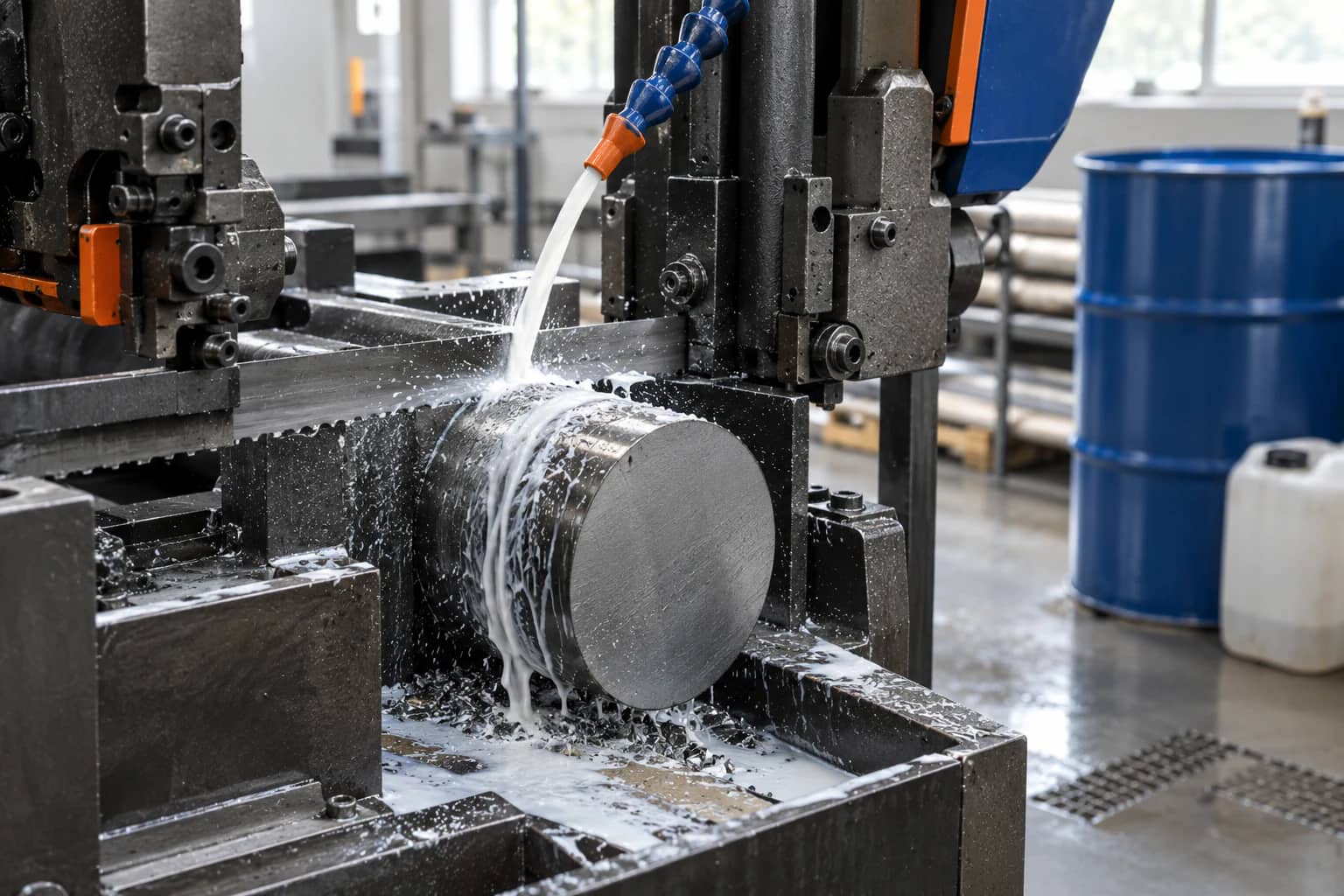
Soluble cutting fluid keeps the cut cool, lubricated and clear of swarf. Choose a pack from the range below and add it to the same order as your blades.
What soluble cutting fluid does at the saw
Soluble cutting fluid is a concentrate that mixes with water into a milky emulsion. Flooded or misted over the blade where it enters the cut, it does three jobs at once.
It cools
Much of the heat of a cut ends up in the chip and the tooth tips. Water carries that heat away, which protects the edge and keeps the workpiece from heating and moving.
It lubricates
The oil in the emulsion lets each tooth shear a clean chip instead of rubbing, which reduces friction, heat and the tendency of soft metals to smear onto the teeth.
It clears the cut
A steady flow flushes swarf out of the gullets so the blade does not reload and chips do not ride back into the kerf.
The result is a cooler, cleaner cut and, in general, a longer-lasting blade. The difference is greatest on steels, stainless steels and tougher alloys. Some materials, cast iron for one, are often cut dry, and some machines use a mist rather than a flood, so follow your machine's manual for how it expects to be run.
The fluids in the shop
4 Rods Oil cutting fluids, each in the pack sizes shown on its page. Prices are per pack.
Rods Oil FC 5
Floodcut FC 5 Cutting Fluid
Packs 5L and 25L
Choose a packFrom £40.29 ex VAT
From £48.35 inc VAT
Carriage added per container
Rods Oil FC 7
Floodcut FC 7 Cutting Fluid
Packs 5L and 25L
Choose a packFrom £43.93 ex VAT
From £52.72 inc VAT
Carriage added per container
Rods Oil FC 8
Floodcut FC 8 Cutting Fluid
Packs 20L and 25L
Choose a packFrom £79.14 ex VAT
From £94.97 inc VAT
Carriage added per container
Rods Oil MC 3
Mistcut MC 3 Cutting Fluid
Pack 5L
Choose a packFrom £43.93 ex VAT
From £52.72 inc VAT
Carriage added per container
The Floodcut and Mistcut ranges and their grades are Rods Oil's own. We list each grade and its pack sizes but not the manufacturer's ratings for what a grade suits, so check Rods Oil's guidance for the metals and machine you run, or contact us with your machine and material before you choose.
Choosing a pack size
The table shows what each fluid comes in. Four questions settle the size.
| Fluid | Range | Grade | Pack sizes |
|---|---|---|---|
| Floodcut FC 5 Cutting Fluid | Floodcut | FC 5 | 5L and 25L |
| Floodcut FC 7 Cutting Fluid | Floodcut | FC 7 | 5L and 25L |
| Floodcut FC 8 Cutting Fluid | Floodcut | FC 8 | 20L and 25L |
| Mistcut MC 3 Cutting Fluid | Mistcut | MC 3 | 5L |
Find your tank volume
Your machine's manual gives the capacity of the coolant tank or sump. That is the volume of working coolant you need for one fill.
Check the dilution
Concentrate is diluted with water, so one pack makes many times its own volume of working coolant. The fluid maker's guidance gives the dilution for each grade; work out how much concentrate one fill of your tank needs.
Allow for top-ups
Coolant is lost on the swarf and by evaporation, so a tank needs topping up between fills. Allow for the top-ups and the next fill, so the saw is not waiting on concentrate.
Count the containers
Carriage depends on the number of containers in the order, and every pack counts as one container whatever its size. One larger pack carries less carriage than several small ones.
Mixing and looking after the coolant
Follow the maker's mixing instructions for the grade you buy. The points below are general practice, not a substitute for them.
- Add the concentrate to the water. Stir as you pour. The usual advice is concentrate into water, not the other way round.
- Start clean. Use a clean tank and clean water. Dirt and old coolant shorten the life of a new fill.
- Check the concentration. A refractometer or the maker's test method tells you whether the mix has drifted. Top up with mixed coolant rather than plain water or neat concentrate.
- Keep the sump clean. Remove swarf and skim off tramp oil, the machine oil that floats on the surface. Both feed bacteria and make the coolant smell.
- Know the signs of a tired fill. A sour smell, a change of colour, a slimy film or rust on the machine all mean it is time to replace the coolant, not top it up.
- Store and dispose of it properly. Keep concentrate sealed and away from frost and heat, read the manufacturer's safety data sheet for handling and protective equipment, and dispose of used coolant through a licensed waste contractor, never down a drain.
Carriage on cutting fluids
Bandsaw blades ship free. Cutting fluids are the one thing we charge carriage on. It is worked out once for the whole order from the number of containers in it, and every pack counts as one container whatever its size. An order with blades and fluid pays the fluid carriage only.
| Containers in the order | Carriage |
|---|---|
| 1 | £13.75 ex VAT£16.50 inc VAT |
| 2 | £15.95 ex VAT£19.14 inc VAT |
| 3 | £18.15 ex VAT£21.78 inc VAT |
| 4 | £20.35 ex VAT£24.42 inc VAT |
The exact carriage for your order is shown at checkout before you pay.
Blades that run with coolant
Steel cutting is where coolant earns its place. These are the blades and guides to read alongside it.
Bi-metal bandsaw blades
The default for steel, stainless steel and non-ferrous metals in fabrication and engineering shops.
Carbide-tipped bandsaw blades
For titanium, nickel alloys and hardened tool steels, where generous coolant matters most.
All bandsaw blades
Every construction compared, with the general rules for pitch and width.
Material guides for metal cutting


Frequently asked questions
What does soluble cutting fluid do on a bandsaw?
Which grade should I buy?
How much concentrate do I need?
How is carriage charged on fluids?
How do I look after the coolant once it is mixed?
Add a pack of cutting fluid to your next blade order.
Shop cutting fluids