
Material guide
Bandsaw blades for aluminium
Aluminium cuts fast but packs gullets and wears edges. The answer is a foundry-pattern blade at the coarsest pitch the section allows: M42 bi-metal for general non-ferrous work and set carbide where high-silicon castings grind HSS teeth away.
The problem with cutting aluminium
Aluminium is soft. That is the trap. A fine-pitch blade meant for steel puts too many teeth in the cut, each taking a sliver too small to clear. The soft, gummy swarf packs the gullets, sticks to the tooth faces and starts to weld on. Once the gullets are full the blade stops cutting and starts rubbing, the cut heats up, the finish tears and the band wanders off line.
Cast aluminium brings the opposite problem. High-silicon casting alloys carry hard particles that scrub the tooth edge like sandpaper, while foundry work adds sand inclusions and the interrupted cuts of gates and risers. An ordinary edge dulls fast in that company. A dull tooth in gummy material loads up even faster, so the two failure modes feed each other.
The right blade answers both. A coarse pitch gives each tooth a big gullet, so the swarf curls, clears and drops instead of packing. Foundry-pattern edges, whether M42 bi-metal or set tungsten carbide, keep cutting through abrasive material long after a plain edge has gone blunt.
Recommended blades for aluminium
Blades on sale today that suit this material, with the reason from each listing. Every one is welded to your machine's length.
| Blade | Construction | Width range | Why this blade | Price |
|---|---|---|---|---|
| 3869 Carbide Triple Set TS Bandsaw BladeBahco | Tungsten carbide tips on an alloy backing, some further coatedCarbide-tipped blades guide | 13mm to 34mm | Triple Set Foundry carbide blade for aluminium, gates and risers, bronze, copper and more. | From £34.57 ex VAT£41.48 inc VAT |
| Saw37C Flex Back Carbon Bandsaw BladeDakin-Flathers | Hardened carbon steel body and teeth, no alloy tipCarbon steel blades guide | 3mm to 32mm | Flexback carbon bandsaw blade for wood, plastics and non-ferrous metals, welded to your length in the UK. | From £10.93 ex VAT£13.12 inc VAT |
| Maverick Bandsaw BladeMorse | HSS tooth edge welded to a flexible alloy steel backingBi-metal blades guide | 27mm to 54mm | Production and job-shop bi-metal blade for tool steels, stainless, structural shapes and tough alloys. | From £13.17 ex VAT£15.80 inc VAT |
| 3860 TMC TMC Bandsaw BladeBahco | Tungsten carbide tips on an alloy backing, some further coatedCarbide-tipped blades guide | 41mm to 67mm | Unset multi-chip carbide blade for titanium, high-temperature alloys, stainless steel and aluminium. | From £38.87 ex VAT£46.64 inc VAT |
| 3868 Carbide Triple Set TSX Bandsaw BladeBahco | Tungsten carbide tips on an alloy backing, some further coatedCarbide-tipped blades guide | 27mm to 67mm | Triple Set carbide blade for titanium and graphite alloys, high-silicon aluminium and matrix alloys. | From £36.08 ex VAT£43.30 inc VAT |
Getting the cut right
General rules that hold across machines. Exact widths, pitches and options are on each product page.
Choose a coarse pitch
Aluminium swarf is bulky and sticky, so it needs room. Pick the coarsest pitch your section allows: fewer, bigger teeth mean bigger gullets that carry the swarf out of the cut instead of packing solid. Keep enough teeth in contact with the work to avoid snatching on thin wall sections, but when in doubt go coarser.
Match the edge to the alloy
Wrought and extruded alloys cut cleanly with a bi-metal edge such as the M42 foundry patterns. High-silicon castings and anything carrying sand are a different job: their hard particles grind HSS away, so step up to a set carbide blade before edge wear turns into tooth loading.
Keep the swarf moving
Feed steadily and positively. A tentative feed lets teeth rub rather than bite, which heats the cut and encourages swarf to weld to the tooth faces. Use a chip brush if the machine has one, keep it touching the band and use lubricant where the machine allows: aluminium loads a dry blade far faster than a wet one.
Clamp castings against chatter
Gates, risers and odd-shaped castings give interrupted cuts that hammer the teeth, so clamp the work so it cannot rotate or chatter. Check blade tension and guide condition before the cut: a loose band in soft material wanders. Once a cut runs off line in aluminium it tends to keep going.
Industry guide
Non-Ferrous Metals and Foundry
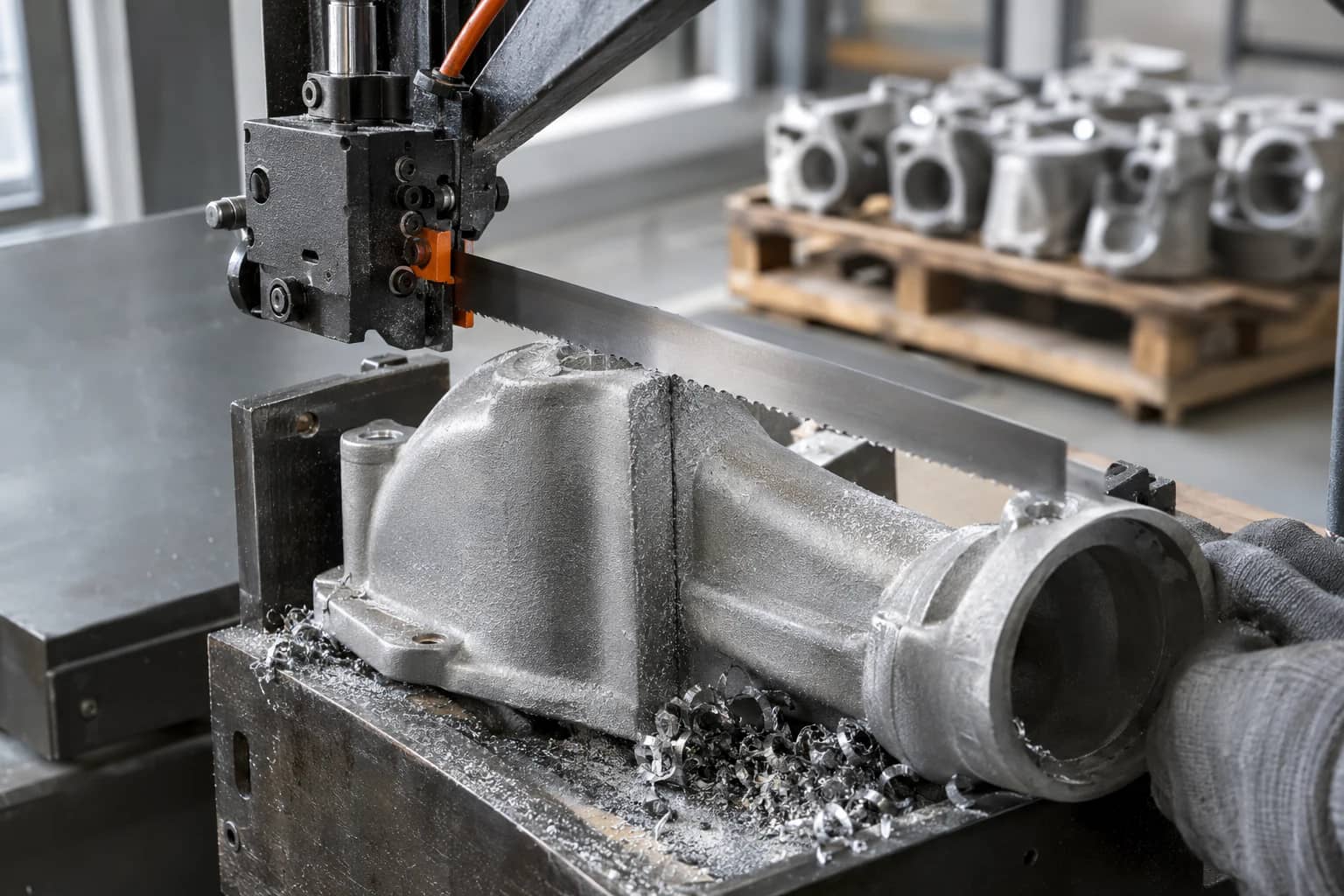
Cutting aluminium for a living? The industry guide maps the whole workload, not just this material.


Frequently asked questions
What blade do I need for cutting aluminium extrusion?
What blade should I use for cast aluminium?
Why does my bandsaw blade clog when cutting aluminium?
Tell the blade wizard your machine and length and it will narrow the range for aluminium.
Find my blade