
Industry guide
Blades that survive sand, gates and risers
Foundry-pattern carbide and bi-metal bandsaw blades for aluminium, brass, copper, bronze and magnesium, chosen for the abrasive, interrupted cutting of casting shops. Every blade is welded to your machine's length.
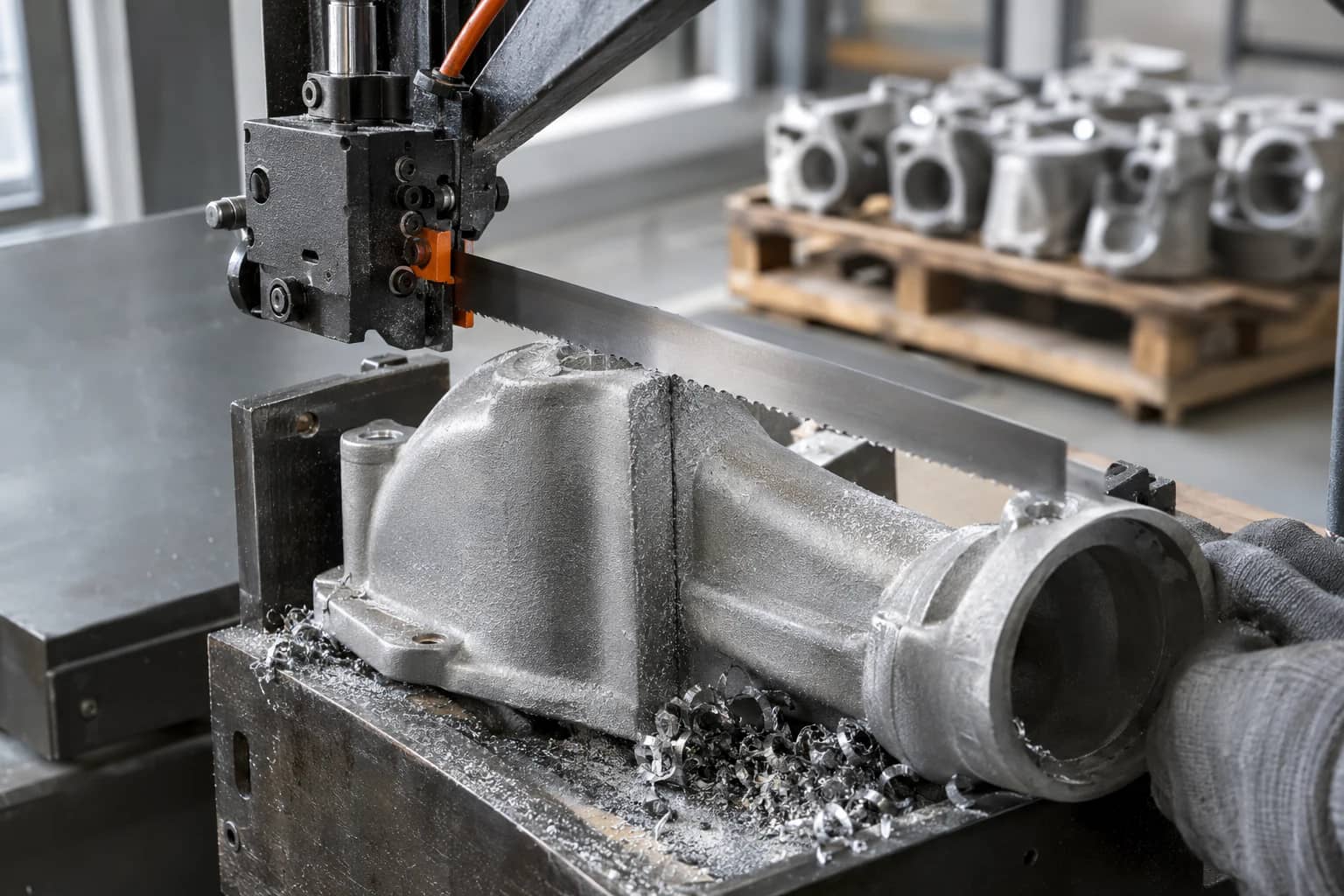
Foundry cutting punishes ordinary blades. Castings arrive with sand still in the surface, gates and risers give interrupted cuts that hammer the tooth line and soft non-ferrous alloys pack gullets until the blade stops cutting and starts rubbing. If you run a foundry or a non-ferrous fabrication shop cutting aluminium, brass, copper, bronze or magnesium, you need blades built for that duty rather than general workshop patterns pressed into it.
That is why foundry-pattern carbide-tipped blades lead this page: tungsten carbide tips on an alloy backing stay hard and keep their edge in sandy, abrasive cutting, while set-tooth versions create the clearance interrupted cuts demand. Bi-metal and carbon options cover the lighter end of the same work. Every blade is welded to the length your machine takes.
Recommended blades for this work
Blades on sale today that suit this work, each with the reason from its own listing. Every one is welded to your machine's length.
Bahco
3869 Carbide Triple Set TS Bandsaw Blade
Triple Set Foundry carbide blade for aluminium, gates and risers, bronze, copper and more.
From £34.57 ex VAT£41.48 inc VAT
Dakin-Flathers
Saw37C Flex Back Carbon Bandsaw Blade
Flexback carbon bandsaw blade for wood, plastics and non-ferrous metals, welded to your length in the UK.
From £10.93 ex VAT£13.12 inc VAT
Bahco
3868 Carbide Triple Set TSS Bandsaw Blade
Triple Set carbide blade for difficult and abrasive materials in production cutting.
From £37.37 ex VAT£44.84 inc VAT
Bahco
3860 TMC TMC Bandsaw Blade
Unset multi-chip carbide blade for titanium, high-temperature alloys, stainless steel and aluminium.
From £38.87 ex VAT£46.64 inc VAT
Bahco
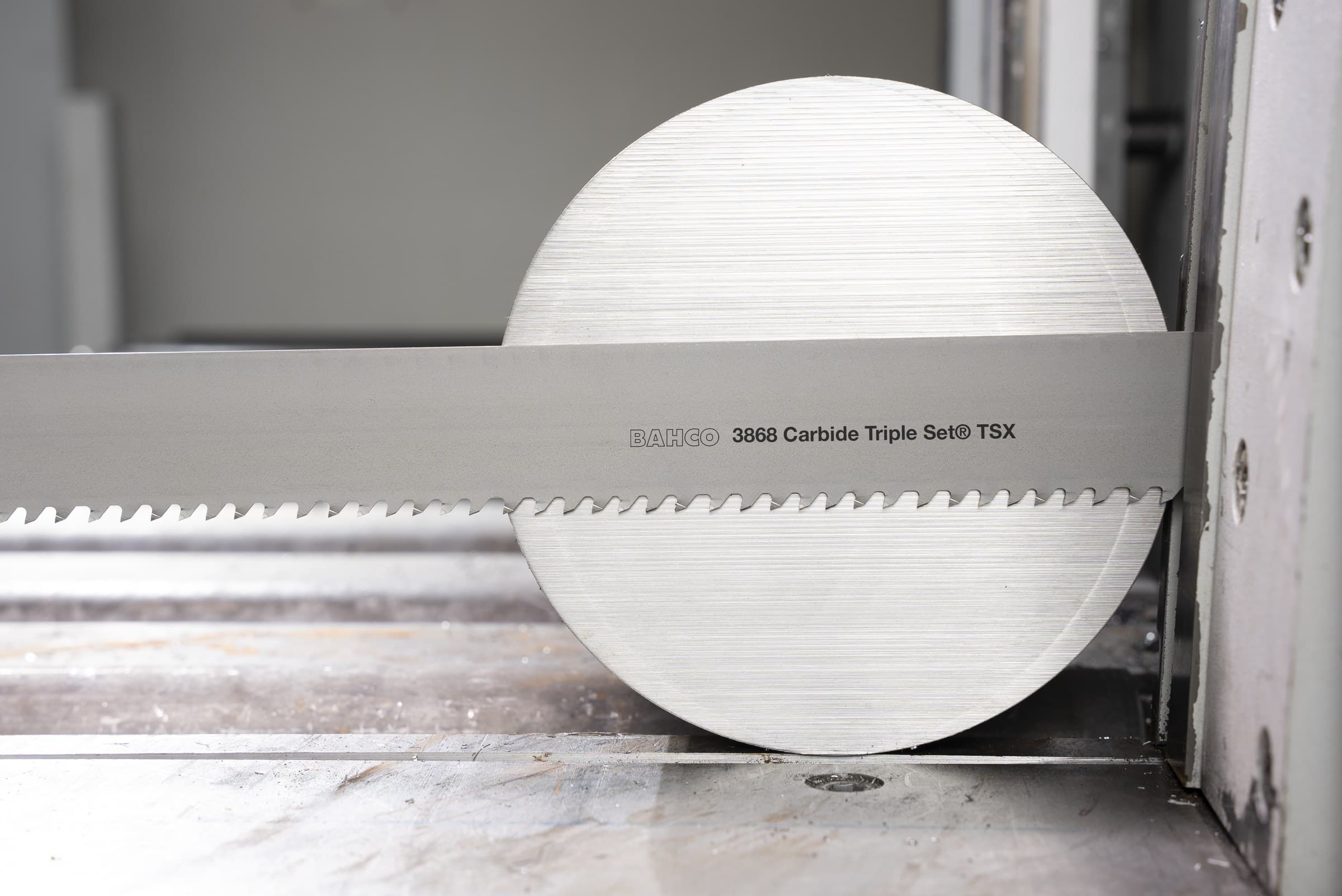
3868 Carbide Triple Set TSX Bandsaw Blade
Triple Set carbide blade for titanium and graphite alloys, high-silicon aluminium and matrix alloys.
From £36.08 ex VAT£43.30 inc VAT
Morse
Maverick Bandsaw Blade
Production and job-shop bi-metal blade for tool steels, stainless, structural shapes and tough alloys.
From £13.17 ex VAT£15.80 inc VAT
Why carbide leads in the foundry
Carbide-tipped blades put tungsten carbide tips on an alloy backing (some are further coated). The tips stay hard far beyond HSS temperatures, which is exactly what abrasive, interrupted foundry cutting asks of a blade. Sand inclusions and high-silicon aluminium wear a conventional edge like sandpaper; carbide shrugs off the same abuse for far longer. For gates and risers, difficult sections and demanding foundry work, a carbide-tipped blade is the pattern built for the job rather than adapted to it.
Bi-metal blades weld a high speed steel tooth edge, commonly M42 or M51, onto a fatigue-resistant alloy backing. They remain the sensible step across for much non-ferrous work. Where the cutting is cleaner (machined bar or castings already fettled) a foundry-pattern bi-metal blade still resists abrasive wear well. Keep carbide for the sandy, interrupted and high-silicon jobs; run bi-metal for the everyday aluminium, brass and copper that makes up the rest of the week.
On the saw table
The workpieces this industry actually feeds through a band, and what each asks of the blade.
Cutting off gates and risers
Removing gates and risers is the classic foundry cut: interrupted, off-centre and often through surfaces that still carry moulding sand. Ordinary teeth chip and dull quickly under that hammering. Set carbide teeth, as on the Bahco Triple Set Foundry, create clearance in the cut and take the shock of an interrupted entry. Bahco rates the blade for aluminium including gates and risers, so it is a pattern built for exactly this job.
Gummy aluminium that loads teeth
Soft aluminium and other non-ferrous alloys cut fast but load the blade: swarf welds into the gullets until the teeth stop biting. Foundry-pattern blades are designed to keep swarf moving. A foundry-pattern bi-metal blade with an M42 edge resists the abrasive wear that sandy castings add on top. If your current blade slows mid-cut and leaves a smeared finish on aluminium, loading is usually the culprit, not blade sharpness.
Brass, bronze and copper sections
Copper-alloy work sits alongside aluminium in most non-ferrous shops. Brass, bronze and copper each behave differently under the tooth. Bahco rates the Carbide Triple Set Foundry for bronze and copper as well as aluminium, so one blade covers a mixed rack of castings and bar. For lighter sections on smaller machines, the Saw37C Flexback carbon blade cuts aluminium, copper and brass and suits shops that change blades often.


Frequently asked questions
Why do castings blunt blades so much faster than bar stock?
How do I stop soft aluminium clogging the blade?
Can one blade cover a mixed non-ferrous workload?
Tell the blade wizard your material, machine and length and it will narrow the range for you.
Start the blade wizard