Bi-metal vs carbide bandsaw blades, an honest decision guide
How bi-metal and carbide-tipped bandsaw blades are made, where each construction wins and how to judge them on cost per cut rather than price per blade.
The Bandsaw Store team
For everyday cutting of mild steel, structural sections and general engineering stock, bi-metal is the right blade and carbide is money spent on a problem you do not have. For hardened, abrasive, exotic and high-nickel materials, carbide is not a luxury: it is the only edge that keeps cutting. The honest way to choose between them is cost per cut, not price per blade.
How each blade is actually made
A bi-metal blade is two steels doing two jobs. A narrow strip of high speed steel, typically an M42 or M51 grade, is electron-beam welded along the edge of a tough spring steel backer. The teeth are then milled and set so that each cutting tip is HSS while the body of the band stays flexible and fatigue resistant. The edge holds its hardness at the temperatures steel cutting generates; the backer survives millions of flex cycles around the wheels.
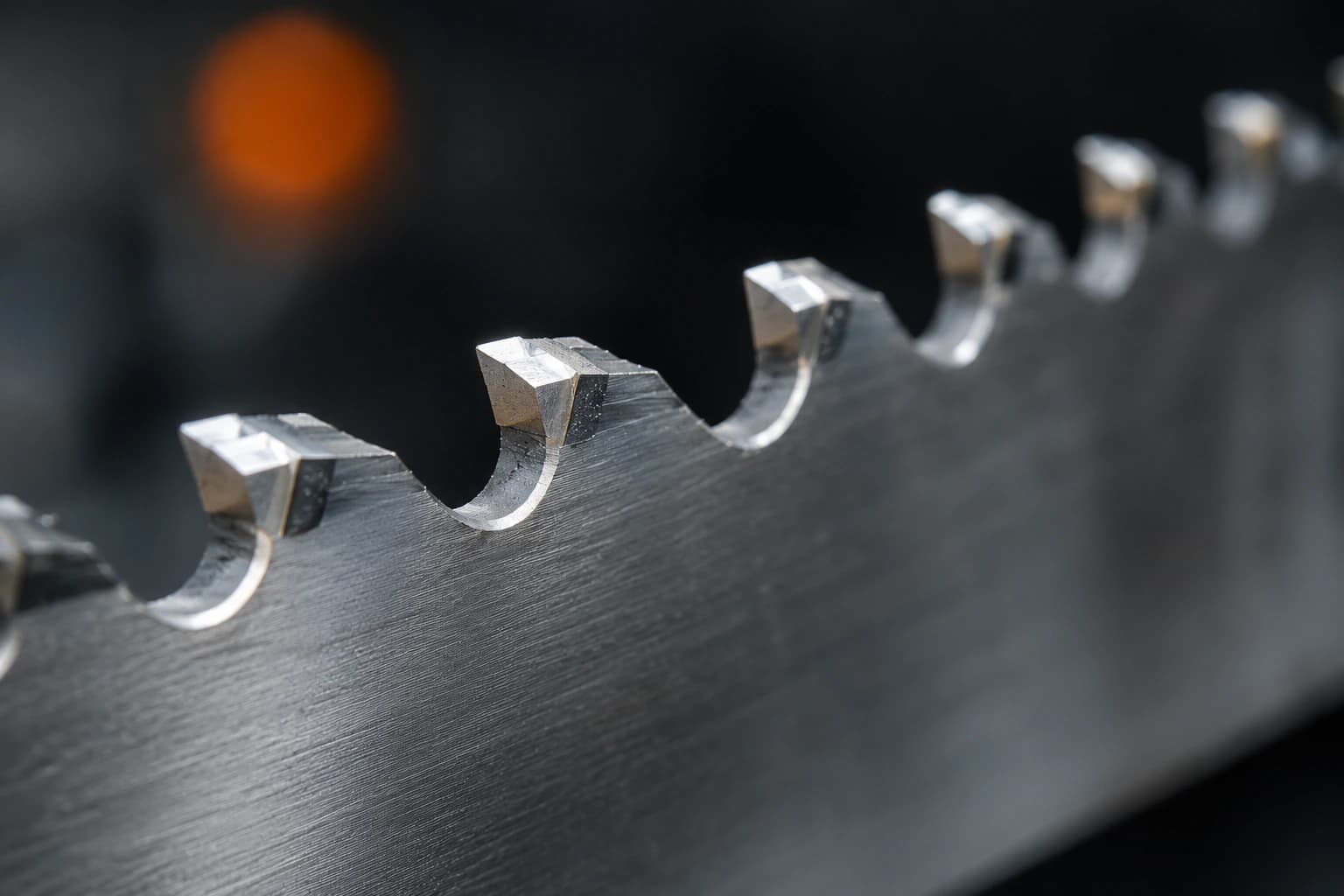
A carbide-tipped blade takes a different route. Individual tungsten carbide tips are brazed onto the teeth of an alloy steel backer, then ground to their final geometry. Some are further coated for extra wear resistance. Carbide stays hard far beyond the temperatures that soften HSS, and it shrugs off abrasion that would round over an HSS tooth in minutes. The trade is brittleness: carbide tips do not like shock, vibration or a machine that rattles.
That construction difference explains almost everything about where each blade belongs.
Where bi-metal wins
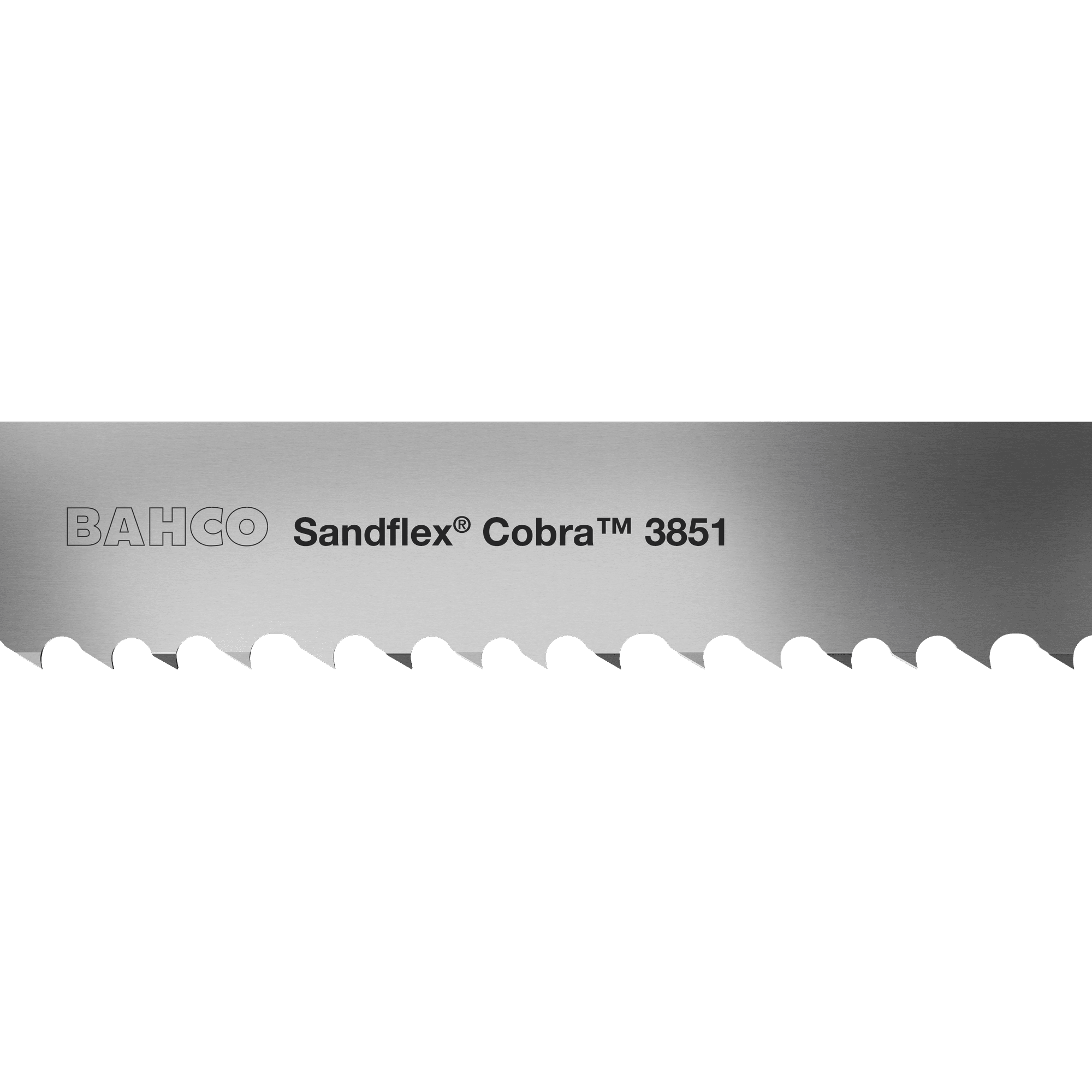
Bi-metal is the default in fabrication and engineering workshops for good reasons. On mild steel, structural sections, box, tube, angle and the common alloy steels, a good bi-metal blade cuts quickly, tolerates interrupted cuts and bundle cutting, forgives a less than perfect machine and costs a fraction of a carbide band. If a careless cut wrecks a blade, the loss stings rather than hurts.
It is also the more flexible choice in the literal sense. Bi-metal bands run happily on smaller wheels and lighter machines where a heavy-gauge carbide band would be working against its own stiffness. If your work is mixed and unpredictable, bi-metal keeps you cutting without a blade change every time the material bin changes.
Within bi-metal there is still a choice of edge grade, which we cover separately in M42 vs M51.
Where carbide wins
Carbide earns its keep where HSS gives up: titanium, nickel-based high-temperature alloys, hardened and high-carbide tool steels, high-silicon aluminium castings and abrasive foundry work. On these materials a bi-metal blade does not merely wear faster, it can fail to cut at all once the material work hardens ahead of a dulling edge. Carbide keeps a sharp, hard tip in the cut, so the saw keeps feeding and the cut rate stays up.
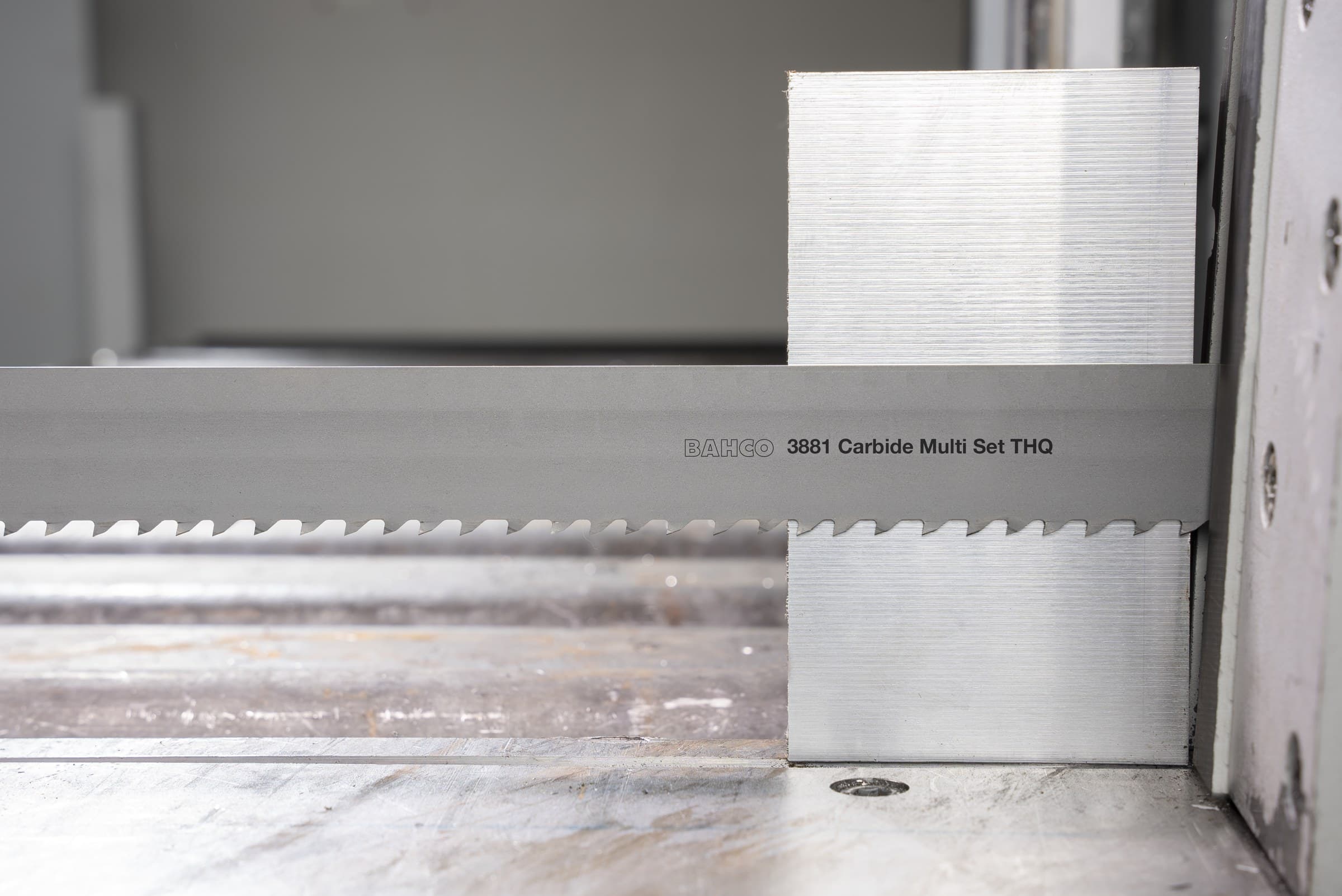
Carbide also wins on long production runs of hard material, where blade changes are downtime and consistency matters. Ranges such as the Bahco 3881 carbide family and the unset multi-chip designs exist precisely for that duty: production cutting of difficult alloys where finish and blade life per cut are the whole game.
The condition is a machine worthy of the blade. Carbide rewards rigidity, correct tension, positive feed control and a proper break-in. On a worn saw with sloppy guides, chipped tips will eat the price advantage before the first shift is out.
The comparison, side by side
| Question | Bi-metal | Carbide-tipped |
|---|---|---|
| Edge material | High speed steel (M42 or M51 grades) | Brazed tungsten carbide tips |
| Backer | Fatigue-resistant spring steel | Alloy steel, typically heavier gauge |
| Best on | Mild and structural steel, stainless sections, mixed general work | Titanium, high-temperature alloys, hardened tool steel, abrasive castings |
| Shock and interrupted cuts | Tolerant | Needs care; unset multi-chip designs prefer clean continuous cuts |
| Machine demands | Forgiving | Rigid machine, good guides, controlled feed |
| Price per blade | Lower | Significantly higher |
| Cost per cut on common steels | Usually lower | Usually higher |
| Cost per cut on hard or abrasive alloys | High to unworkable | Usually lower |
Think in cost per cut
Price per blade is the number on the invoice; cost per cut is the number that matters. Divide the blade price by the cuts it delivers before replacement, then add what your time is worth during blade changes and slow cutting. On mild steel a bi-metal band delivering thousands of cuts at a modest price is very hard to beat. On a nickel alloy, the same band might manage a handful of slow cuts before it rubs, while a carbide blade cuts faster and lasts many times longer. Same arithmetic, opposite answer.
The break-even question is simple to ask of your own saw: is the material stopping the bi-metal blade, or is the blade stopping you? If bi-metal bands are dying young from wear on hard or abrasive stock rather than from fatigue or bad settings, carbide will usually come out cheaper per cut despite the price tag.
When bi-metal remains the right buy
Be honest about the duty. If your week is mild steel with occasional stainless, bi-metal remains the right buy and the money saved buys a lot of spare blades. If the work is mixed, interrupted or bundle cutting, bi-metal's tolerance is worth more than carbide's edge life. If the machine is light, elderly or loosely guided, fix that before spending carbide money, because the blade cannot out-cut the saw it runs on.
Step up to a carbide-tipped blade when the material list says so: hard, abrasive, exotic or high-nickel work, or long production runs where cut rate and blade life per cut decide the economics. Both constructions, in both Bahco and Dakin-Flathers ranges, are welded to your machine's exact loop length.
Not sure which side of the line your work falls on? The blade finder narrows the catalogue from your material and machine, or tell us what you cut and we will give you a straight answer.
The Bandsaw Store team
Technical points follow general engineering practice and the manufacturers' published ranges. If a question is not answered here, ask us directly.