M42 vs M51 bandsaw blades, when the upgrade pays
M42 and M51 are the two cobalt HSS grades on bi-metal bandsaw blades. What separates them, when M42 is enough and when M51 repays its higher price.
The Bandsaw Store team
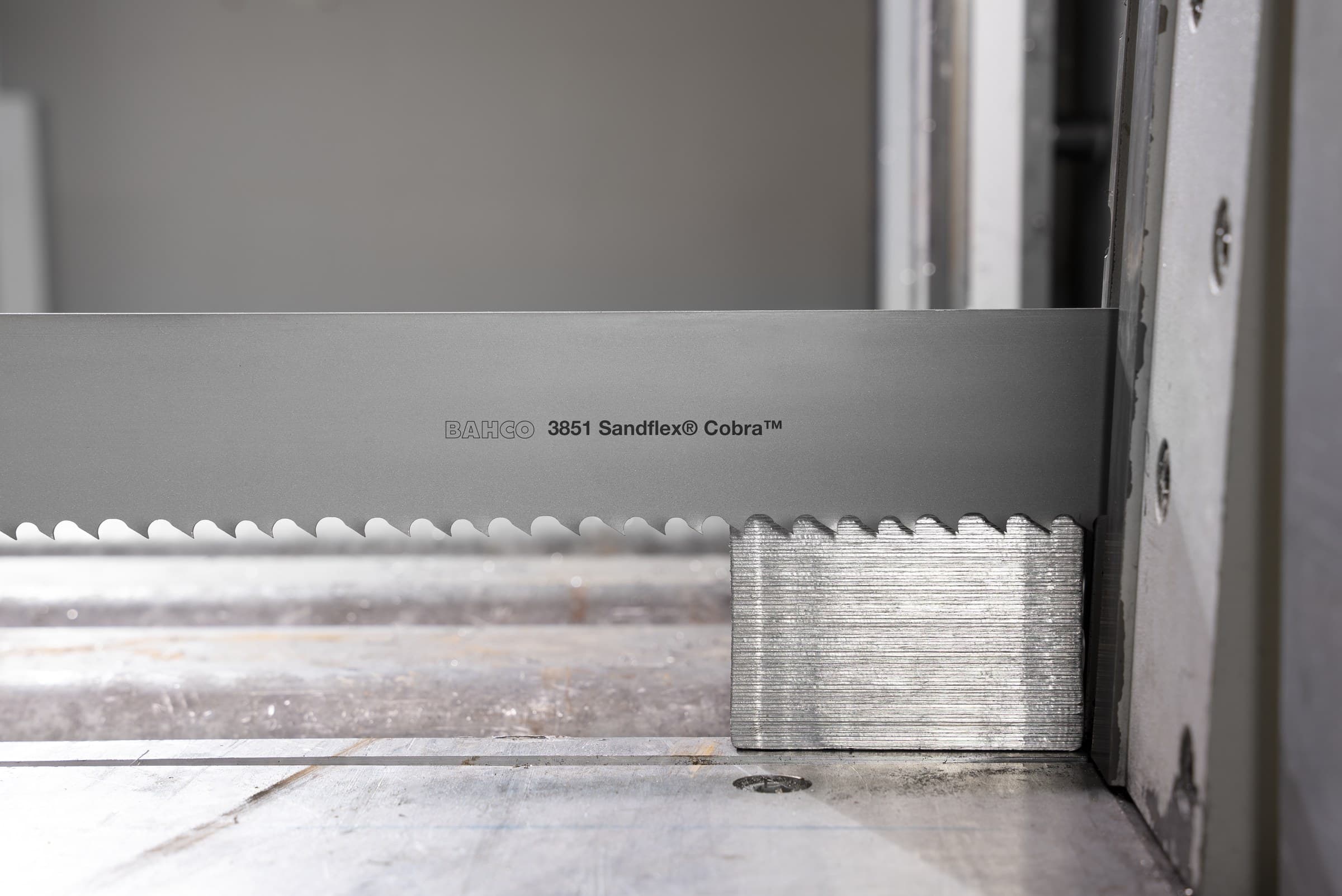
M42 is the industry workhorse and the right edge for most metal-cutting bandsaws: it handles mild steel, structural sections, common alloy steels and everyday stainless work. M51 is the step up for harder, more abrasive and work-hardening materials, where its extra hot hardness keeps the tooth cutting after an M42 edge has started to rub. If M42 blades are wearing out rather than breaking, M51 is the usual answer.
Same construction, different edge
Both grades arrive on the same construction: a bi-metal blade, meaning a narrow strip of high speed steel electron-beam welded along a fatigue-resistant alloy backer before the teeth are milled and set. The backer does the flexing, the HSS strip does the cutting, and the weld line between them runs the length of the band. M42 and M51 are simply two choices for that strip. Everything else you would specify, width, gauge, tooth pitch and set, is available in either.
That matters for a practical reason: switching grades is not a machine change. The same saw, the same loop length and usually the same pitch carry over, so trying M51 on a problem material is a one-blade experiment, not a project.
What cobalt and tungsten actually do
Both are cobalt high speed steels. As general metallurgy, M42 carries around 8 percent cobalt, which raises the temperature the edge can reach before it softens, known as red hardness or hot hardness. That is the property that lets an HSS tooth survive steel cutting, where the tooth tip runs far hotter than the band ever feels.
M51 adds tungsten to the recipe and pushes red hardness and wear resistance further. The practical translation: on materials that generate more heat at the tooth tip or grind at the edge abrasively, an M51 tooth stays sharp and keeps penetrating after an M42 tooth has begun to dull. A dulling tooth is not just slower. On stainless and other work-hardening materials a rubbing tooth hardens the very surface it is failing to cut, which finishes the blade off faster still. There is more on that failure mode in our guide to choosing a bandsaw blade for stainless steel.
Those figures are approximate, public metallurgy for the grade designations, not a manufacturer's specification. Individual blade ranges vary in geometry, set and backer, which affect performance as much as the grade stamp does.
When M42 is enough
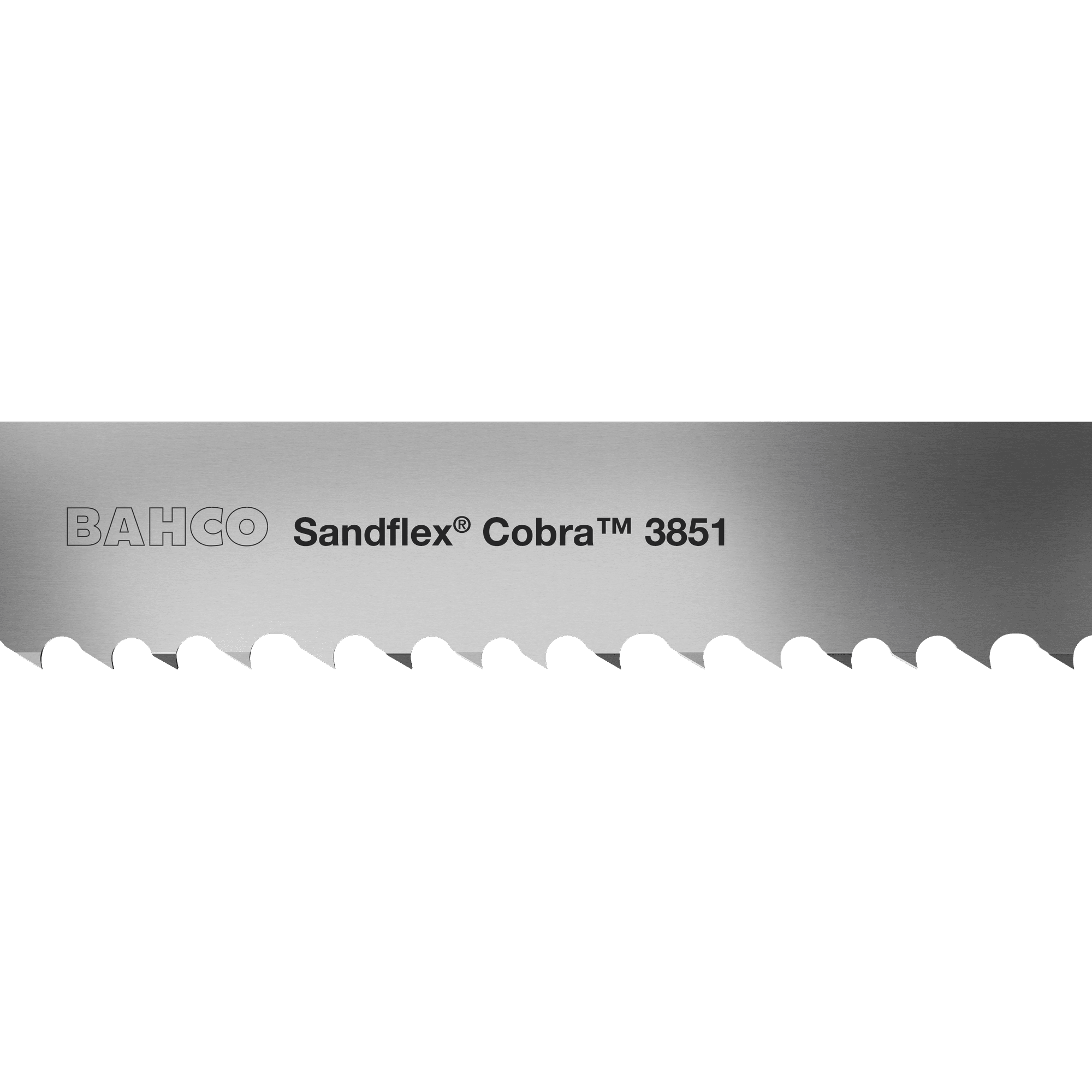
Most of the time. Mild steel, structural hollow sections, angle and flat, bright bar, common engineering steels and routine stainless sections in sensible sizes are all M42 territory, and the grade's dominance in fabrication shops is earned. Both our metal-cutting brands stock M42 as the core of their bi-metal programmes, Bahco through the 3851 Sandflex family and Morse through its M42 series, and for general fabrication we would steer you to M42 without hesitation.
Be suspicious of anyone selling M51 as a cure for blades that are breaking rather than wearing. Premature breakage points at tension, guides, feed or a weld problem, not at the edge grade, and an M51 band will break just as readily on a badly set machine. Our post on why bandsaw blades break separates wear problems from fatigue problems.
When M51 pays
M51 earns its premium when the material is the limiting factor. Watch for these patterns.
| Situation | Stay with M42 | Step up to M51 |
|---|---|---|
| Mild and structural steel, daily mix | Yes | No need |
| Routine stainless sections, occasional cuts | Yes | Optional |
| Heavy or thick-wall stainless steel, constant production | Marginal | Yes |
| Tempered and harder alloy steels | Wearing fast | Yes |
| Annealed tool steel, regular work | Acceptable | Usually worth it |
| Large solid sections, long cuts, high tooth temperatures | Struggling | Yes |
| Blades failing by breakage or stripped teeth | Fix the setup first | Fix the setup first |
| Hardened or high-nickel exotic alloys | No | Consider carbide instead |
The tell is the wear pattern. If M42 edges are rounding over quickly on tough ferrous material while the band itself is healthy, the material is out-running the grade and M51 will hold its edge visibly longer in the same cut. Heavy production adds a second justification: on a saw that runs all shift, a grade that stretches the change interval saves operator time and keeps cut quality consistent between changes, which is worth real money even before the blade economics.
Note the last row of the table. M51 is the top of the HSS ladder, not the top of the ladder. Hardened tool steels, titanium and nickel superalloys sit beyond what any HSS grade cuts economically, which is carbide territory and a different construction entirely.
Price versus life, honestly
M51 costs more per blade than M42, and on easy material you will not get that money back: both grades will cut mild steel for a long time, and the cheaper one wins on cost per cut. On genuinely hard, abrasive or work-hardening material the position reverses, because M51's longer edge life and sustained cut rate spread its price over more cuts. There is no universal multiplier we can honestly quote you, since it depends on your material, section sizes, machine condition and how disciplined the feed settings are.
The practical approach: run M42 until the wear pattern tells you otherwise, then buy one M51 band in the same size and compare cuts per blade on your own saw. Your logbook will settle the argument better than any catalogue, ours included. If you want a second opinion first, tell us what you cut and we will say plainly which grade we would put on your machine.
The Bandsaw Store team
Technical points follow general engineering practice and the manufacturers' published ranges. If a question is not answered here, ask us directly.