Choosing a bandsaw blade for stainless steel
Stainless steel work hardens under a rubbing tooth. How to choose between M42 and M51 bi-metal and carbide-tipped bandsaw blades, with TPI and coolant guidance.
The Bandsaw Store team
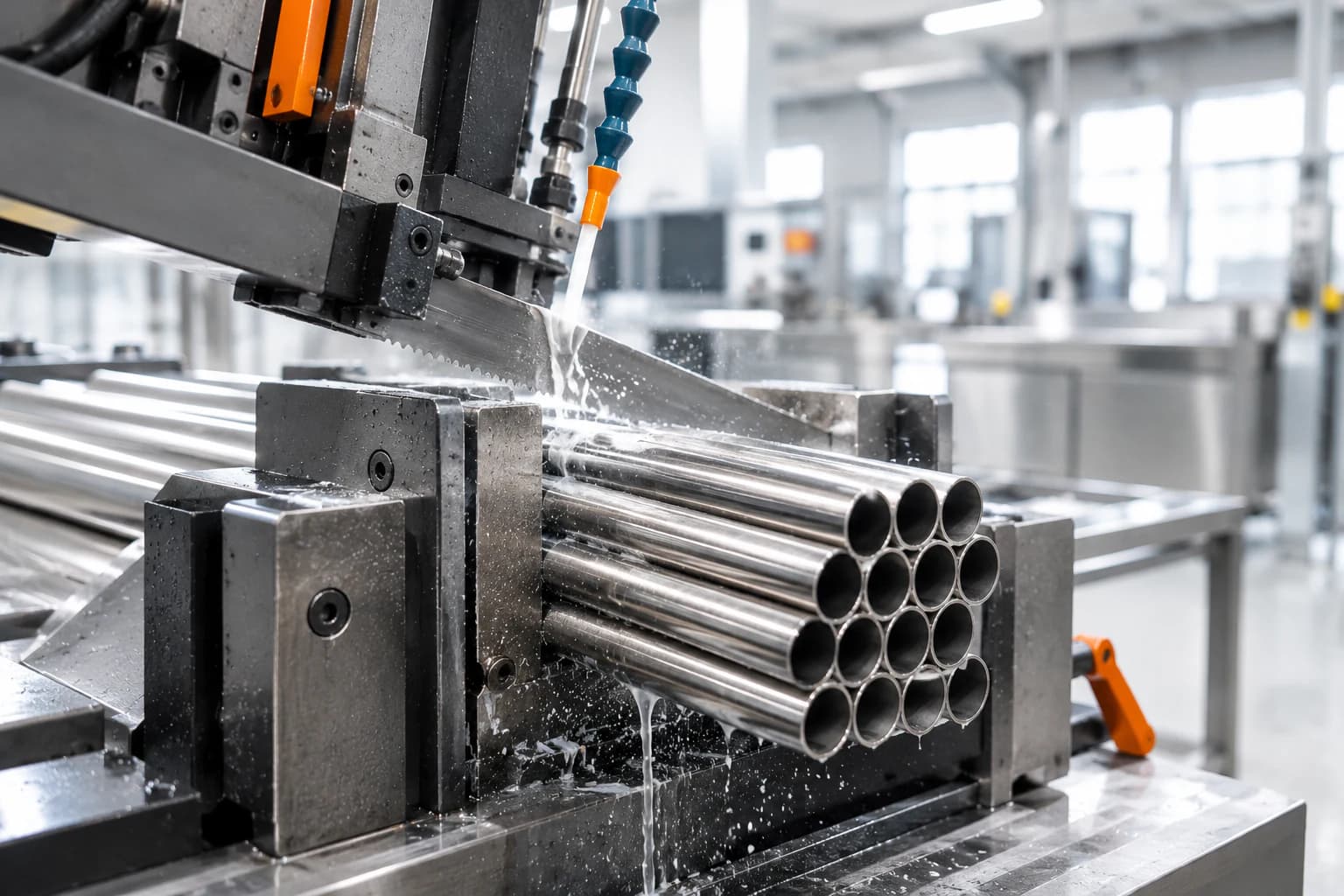
Stainless steel work hardens the moment a tooth rubs instead of cuts, so the blade you choose must bite positively from the very first pass. For most stainless sections that means a high-performance bi-metal blade in an M42 or M51 grade, at a pitch that keeps a sensible number of teeth in the cut. Heavy solids and high-nickel grades justify honed carbide. Steady feed and healthy coolant do the rest.
Why stainless punishes a rubbing tooth
Austenitic stainless steels, the 300 series most fabricators cut daily, have a habit that mild steel does not: they work harden. Deform the surface without removing a chip and the deformed layer becomes markedly harder than the parent material. A tooth that skids across the work instead of digging in creates exactly that deformation, and the next tooth arrives at a surface harder than the one before.
That is the failure loop behind most stainless cutting complaints. A dull blade, a feed rate too timid to load the teeth, or a pitch so fine that each tooth takes almost nothing all produce the same result: teeth rubbing on a glazed, hardened skin, heat climbing, and a blade that dies far short of its potential. The cure is not a gentler touch. It is a blade and a feed rate that take a proper chip from the first tooth to the last.
Bi-metal covers most stainless work
For the everyday run of stainless sections, tube, bar, angle and plate offcuts, a high-performance bi-metal blade is the sensible default. The construction pairs a high speed steel tooth edge with a fatigue-resistant alloy backing, so the teeth keep their hardness at the temperatures stainless generates while the band survives flexing around the wheels thousands of times an hour.
Grade matters within bi-metal. M42 is the cobalt high speed steel grade that handles most stainless work well. M51 carries more tungsten and suits harder, more abrasive duty: larger solid sections and material that wears M42 edges quickly rather than fatiguing them. If your M42 blades are coming off the saw worn rather than broken, the grade above is the usual next step. The full comparison lives in our M42 vs M51 guide.
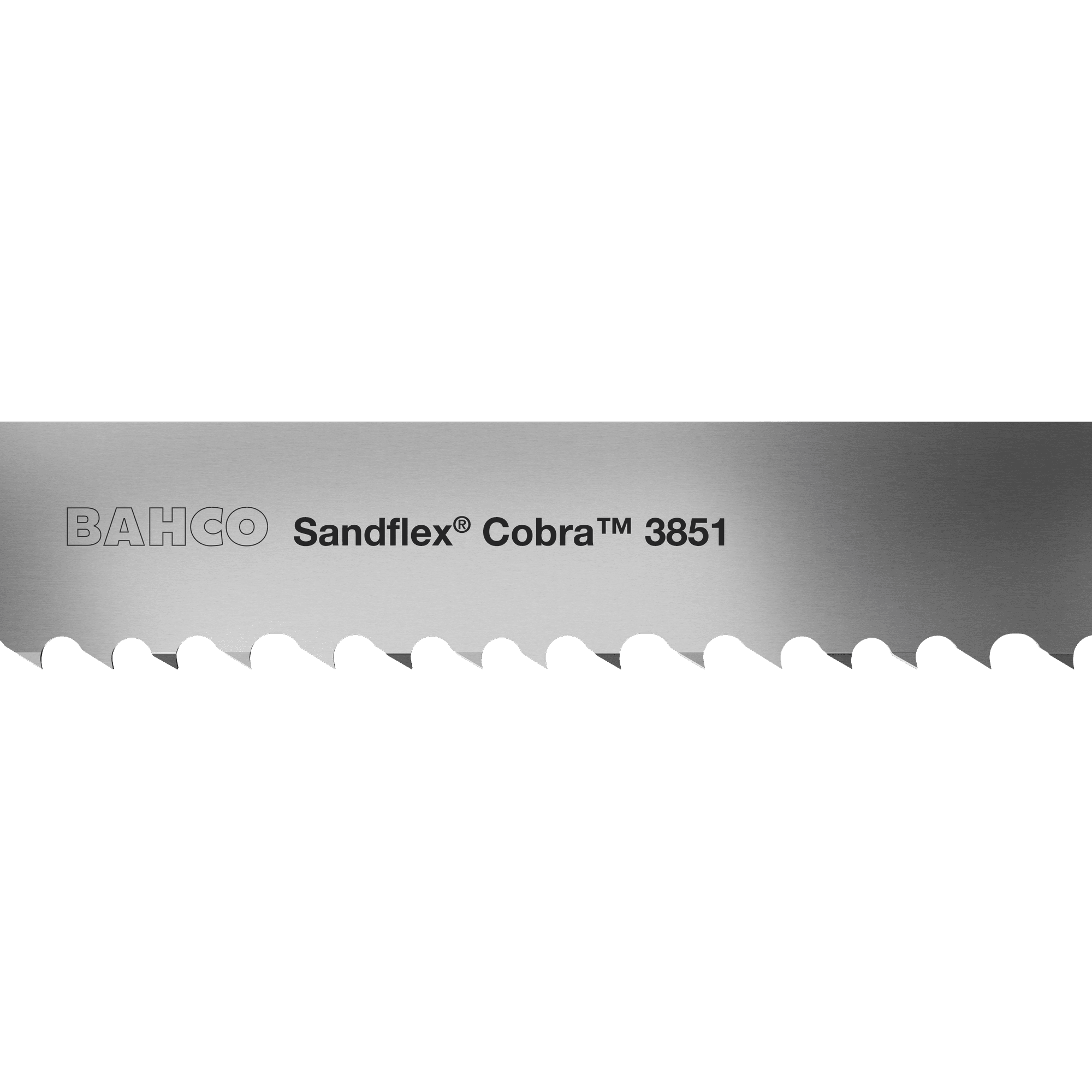
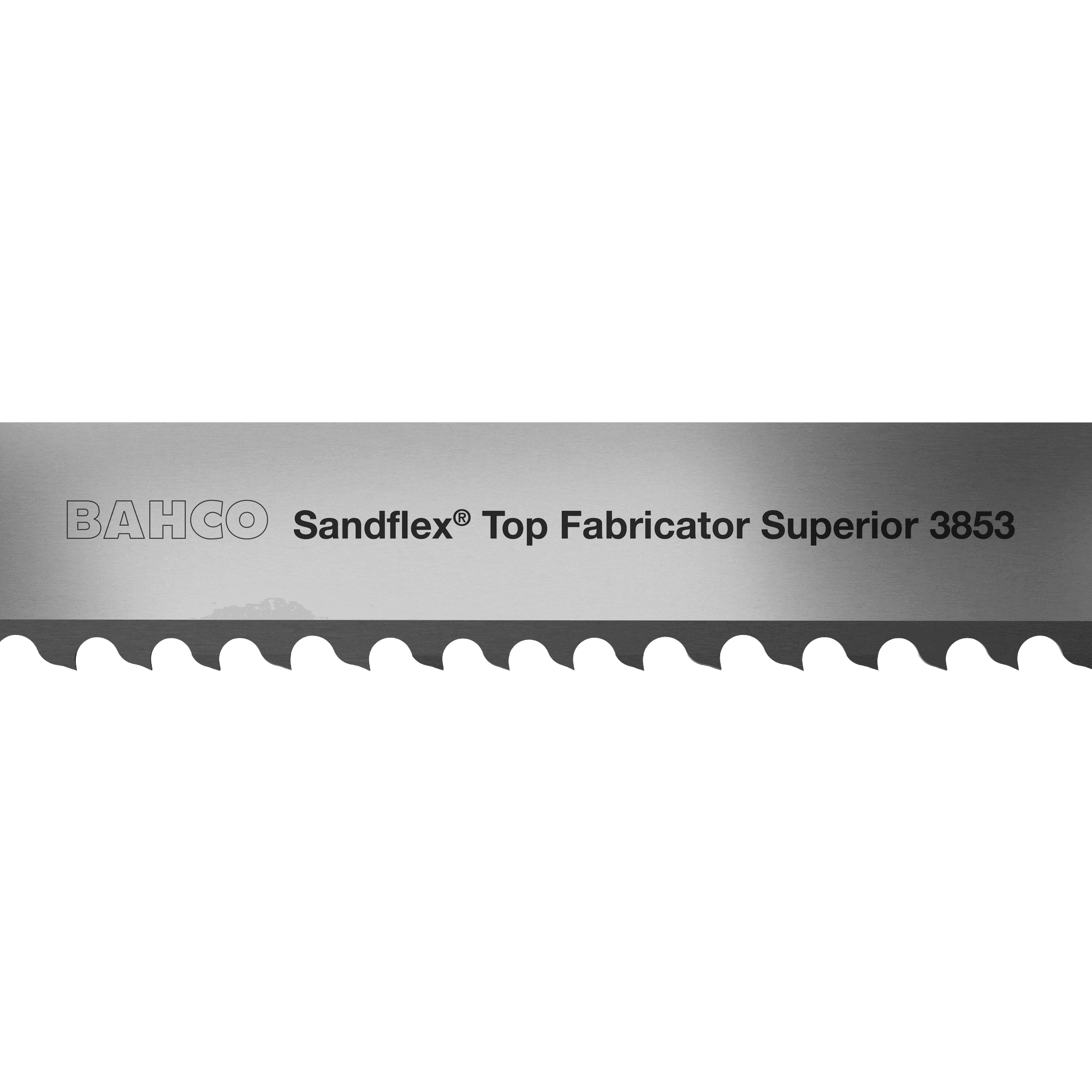
Ranges built for this work carry names you will recognise: Bahco's Sandflex Cobra and Sandflex Top Fabricator on the Bahco side, and the Dakin-Flathers Saw37 bi-metal family from the UK factory. Choose within them by pitch and width for your machine, not by the label alone.
When carbide earns its keep
There is a point where even good bi-metal becomes the slow and expensive option. Heavy solid sections cut all day, duplex and super duplex grades, and high-nickel alloys that behave more like superalloys than steels all push tooth temperatures and wear rates beyond what a high speed steel edge tolerates.
That is carbide-tipped territory. Tungsten carbide tips stay hard far beyond HSS temperatures, and honed carbide edges are the production answer at the heavy and high-nickel end of stainless work. The blade costs more per band, but on the materials that justify it the cost per cut usually falls, because the blade cuts faster and lasts longer between changes. Carbide rewards a rigid machine, correct tension and a gentle break-in before full feed; treat those as part of the price.
Match the pitch to the section
TPI is the decision people get wrong most often on stainless, and the rule is the same one that governs all metal cutting: keep a sensible number of teeth in the cut at any moment. Too few and teeth snag and strip; too many and each tooth takes so thin a chip that it rubs, which on stainless starts the work-hardening loop immediately.
Thin wall tube and sheet need fine pitches so that several teeth always share the wall. Large solids need coarse pitches so each tooth takes a chip big enough to cut beneath any hardened layer. Variable pitch blades smooth the compromise across mixed work and reduce the harmonic buzz that fixed pitches can set up.
| Stainless situation | Sensible blade direction |
|---|---|
| Thin wall tube, pipe and sheet | Fine variable pitch bi-metal, several teeth in the wall at all times |
| Mixed fabrication work, tube and bar | Variable pitch M42 bi-metal as the shop's default band |
| Large solid bar and billet | Coarse variable pitch bi-metal; consider M51 if M42 wears quickly |
| Duplex, super duplex and high-nickel grades | M51 bi-metal for occasional cuts, honed carbide for regular work |
| Heavy production cutting of solids | Carbide-tipped, with rigid setup and proper break-in |
Treat the table as direction, not gospel. Section shape, machine condition and how the material was supplied all move the answer, and if a job sits between two rows we would rather you asked us than guessed.
Coolant and feed discipline
Stainless holds heat in the cut because it conducts heat poorly, so coolant matters more than it does on mild steel. Keep the flow generous and aimed at the cut, and keep the mix at the concentration your coolant supplier recommends: a lean mix neither cools nor lubricates properly, and lubrication is what stops teeth welding tiny smears of stainless to their faces.
Feed discipline is the other half. Set a feed rate that produces a real chip, curled and consistent, and hold it. Backing the feed off when the saw sounds busy feels careful but is precisely the wrong instinct on stainless: the teeth stop cutting, start rubbing and hand the next pass a hardened surface. Watch the swarf. Powdery dust means rubbing; thin, discoloured wires mean too much heat; a steady curl means the blade is doing its job.
Getting the blade onto your machine
Whatever construction you land on, the blade still has to fit. Every stainless-capable blade we sell is welded to the loop length your machine takes, so check the machine plate or measure an old band before ordering. If you are unsure where to start, the blade finder narrows the catalogue by material and machine, and the guidance on this page is exactly the logic it applies.
The short version: pick bi-metal by default, pick the grade by how blades are actually failing, move to carbide when the material or the volume demands it, and never let a tooth rub.
The Bandsaw Store team
Technical points follow general engineering practice and the manufacturers' published ranges. If a question is not answered here, ask us directly.