
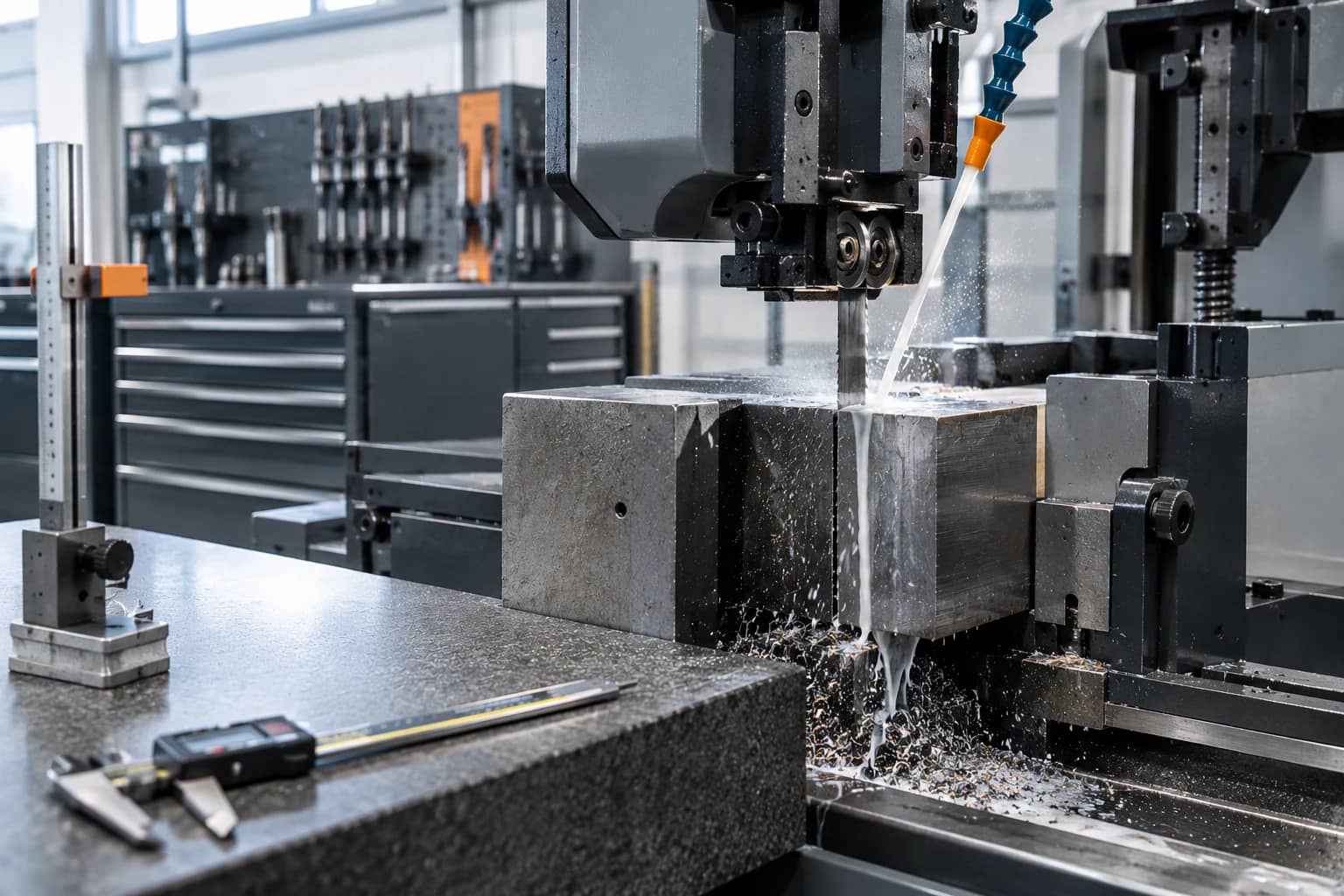
Industry guide
Keep cutting tool steel, titanium and superalloys
Carbide-tipped and premium bi-metal bandsaw blades for toolrooms, die shops and subcontractors cutting titanium, nickel alloys and hardened tool steel, all welded to your machine's length.
Tool steels and high-temperature alloys punish ordinary blades. Hardened die steel blunts a high speed steel edge, titanium concentrates the heat of the cut at the tooth tip and nickel superalloys carry on resisting long after ordinary steels would have parted. If your toolroom, die shop or subcontract work runs on these materials, blade choice is the difference between steady production and constant changeovers.
Carbide-tipped blades are the production answer: tungsten carbide tips on an alloy backing, some further coated, staying hard far beyond the temperatures that finish a high speed steel edge. Premium bi-metal covers the mixed toolroom work that sits alongside, from annealed tool steel to stainless sections. The blades listed on this page come from our current range, each welded to the length your machine takes.
Recommended blades for this work
Blades on sale today that suit this work, each with the reason from its own listing. Every one is welded to your machine's length.
Bahco
3860 TMC TMC Bandsaw Blade
Unset multi-chip carbide blade for titanium, high-temperature alloys, stainless steel and aluminium.
From £38.87 ex VAT£46.64 inc VAT
Bahco
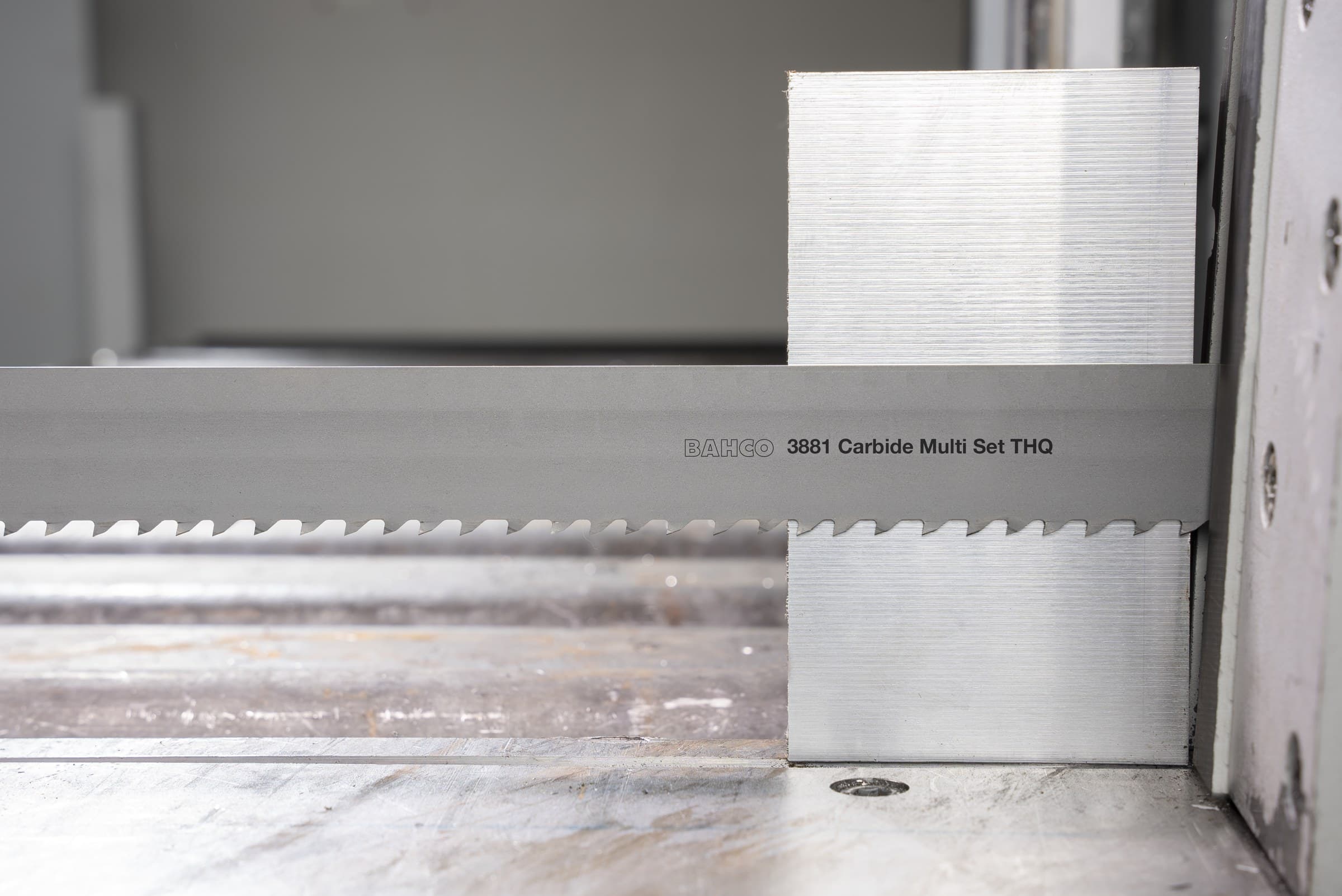
3881 Carbide Multi Set THQ Bandsaw Blade
Multi Set THQ carbide blade for titanium, aerospace alloys, stainless steel and tool steel.
From £38.87 ex VAT£46.64 inc VAT
Bahco
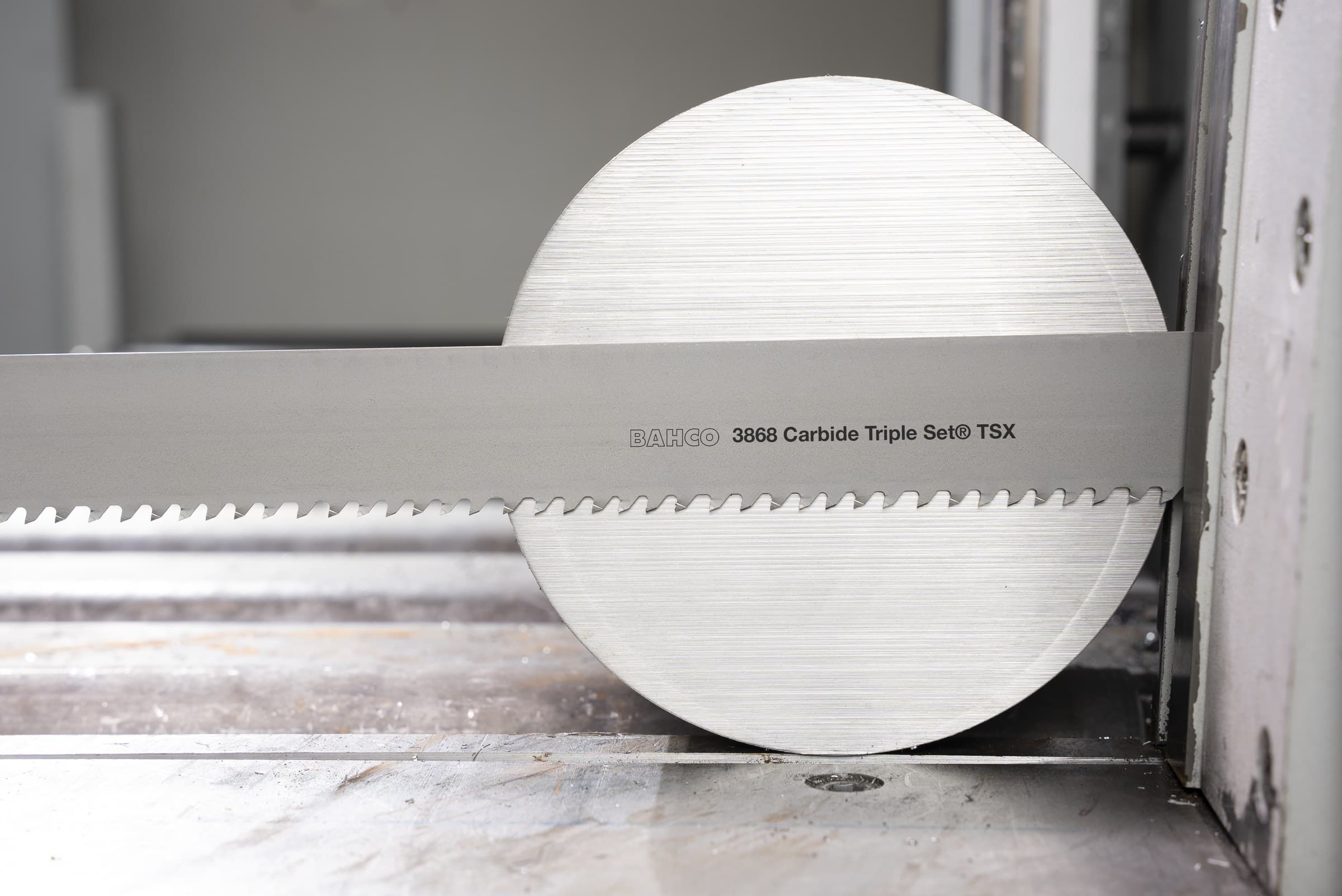
3868 Carbide Triple Set TSX Bandsaw Blade
Triple Set carbide blade for titanium and graphite alloys, high-silicon aluminium and matrix alloys.
From £36.08 ex VAT£43.30 inc VAT
Morse
Maverick Bandsaw Blade
Production and job-shop bi-metal blade for tool steels, stainless, structural shapes and tough alloys.
From £13.17 ex VAT£15.80 inc VAT
Bahco
3859 EZX Extreme Easy-Cut EZX Bandsaw Blade
Easy-Cut Xtreme EZX trimetal blade for structural and stainless steel, cast iron, high-temperature alloys and tool steel.
From £28.55 ex VAT£34.26 inc VAT
Bahco
3881 Carbide Multi Set THS Bandsaw Blade
Multi Set THS honed carbide blade for stainless steel, high-nickel-chrome and aerospace alloys.
From £40.16 ex VAT£48.19 inc VAT
Why carbide tips lead on these alloys
Carbide-tipped blades carry tungsten carbide tips on an alloy backing (some ranges are further coated) and those tips stay hard far beyond the temperatures at which high speed steel softens. That is the property that matters here: titanium, nickel-based high-temperature alloys and hardened, abrasive tool steels are exactly the materials that stop bi-metal blades. Carbide keeps cutting them. For toolrooms and subcontractors running these materials in production, a carbide-tipped band is the working assumption rather than the upgrade.
Bi-metal earns its place wherever the work is mixed. A high speed steel tooth edge, commonly M42 or M51, welded to a fatigue-resistant alloy steel backing cuts everything from aluminium to stainless and tool steels, which is why it remains the default for a toolroom saw that meets annealed bar one day and general engineering sections the next. Step across to bi-metal when the schedule is varied; stay with carbide when hardened grades, titanium or nickel alloys dominate the sawing list.
On the saw table
The workpieces this industry actually feeds through a band, and what each asks of the blade.
Hardened die steel blanks
A die shop rarely saws tool steel in one state. Annealed bar cuts respectably on premium bi-metal, but once a blank comes back from heat treatment or the grade carries heavy carbide content, a high speed steel edge rubs rather than bites. Carbide tips keep a true cutting edge in the hardened material. Matching the blade to the state of the steel, not just the grade stamped on the certificate, is what keeps blanks square and blades alive.
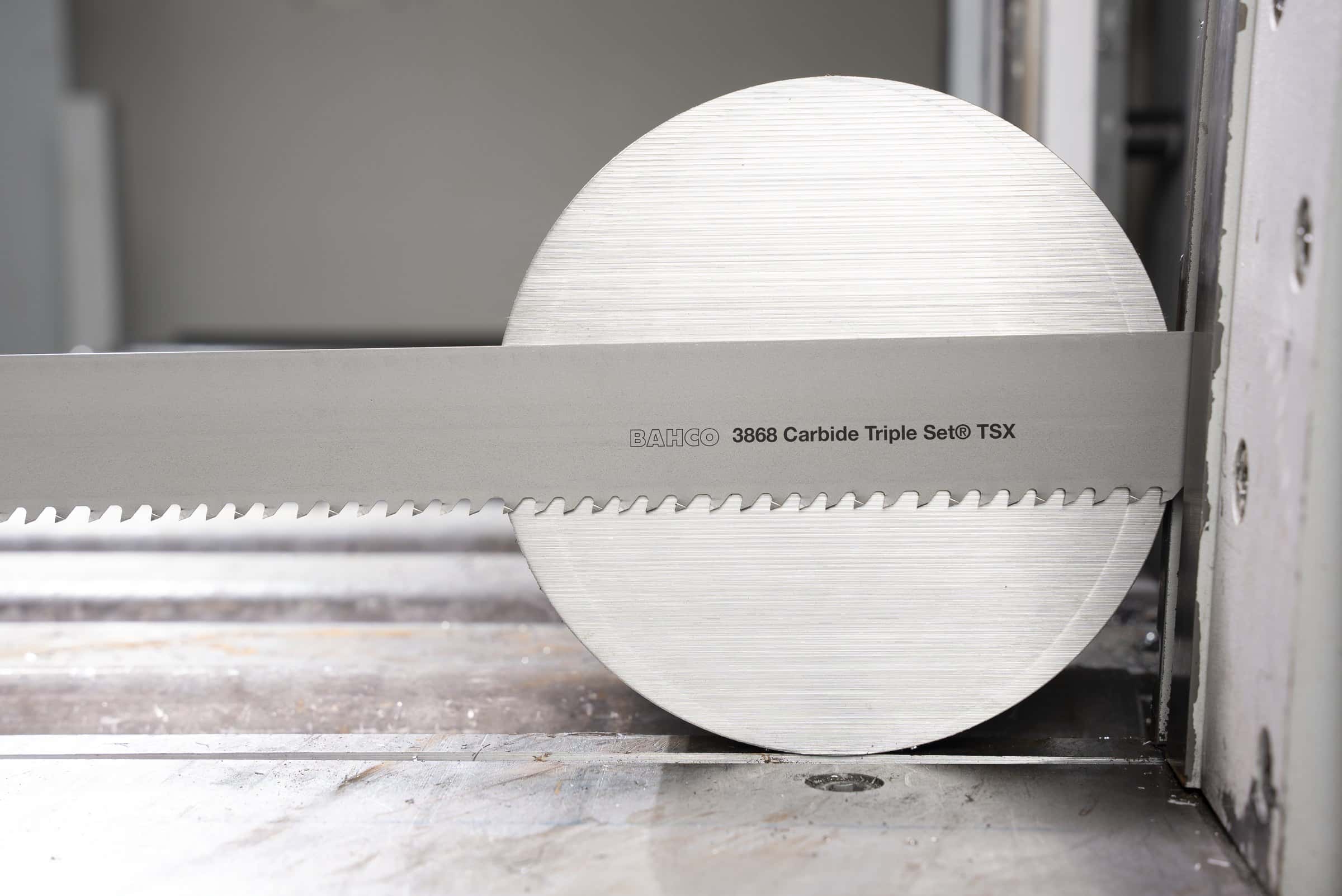
Titanium and nickel alloy sections
Titanium conducts heat poorly, so the heat of the cut concentrates at the tooth tip, exactly where an ordinary edge fails first. Nickel-based high-temperature alloys are no kinder. For subcontractors sawing these sections on a schedule, multi-chip carbide blades split each cut across differently profiled tips so no single edge carries the whole load. That is what turns an alloy that stops bi-metal into a repeatable production cut.
Abrasive and mixed toolroom work
Not every hard cut is a hard material. Graphite alloys, matrix alloys and high-silicon aluminium wear edges by abrasion and can load an unset tooth design, which is where a set carbide pattern keeps clearance in the cut. The same toolroom may also face annealed bar, stainless and general engineering steel in a single week, work that a premium bi-metal band covers without a specialist blade on the machine.
Material guides for this industry


Deeper guidance per workpiece, including the blades that genuinely cut it and why.
From the blog
- Tool die aerospace
Bi-metal vs carbide bandsaw blades, an honest decision guide
How bi-metal and carbide-tipped bandsaw blades are made, where each construction wins and how to judge them on cost per cut rather than price per blade.
- Tool die aerospace
Breaking in a new bandsaw blade, why and how
A razor-fresh bandsaw blade micro-chips under full feed. A short break-in at reduced feed hones the edge instead and repays itself in blade life.
Frequently asked questions
Should I use the same blade for annealed and hardened tool steel?
Why does titanium wear out blades that handle steel comfortably?
Can one blade cover a mixed toolroom and aerospace schedule?
Tell the blade wizard your material, machine and length and it will narrow the range for you.
Start the blade wizard