
Industry guide
Blades that bite before stainless work hardens
Blade recommendations for fabricators cutting stainless sections, tube and plate offcuts. High-performance bi-metal for everyday work, honed carbide for heavy and high-nickel jobs, every blade welded to your machine's exact length.
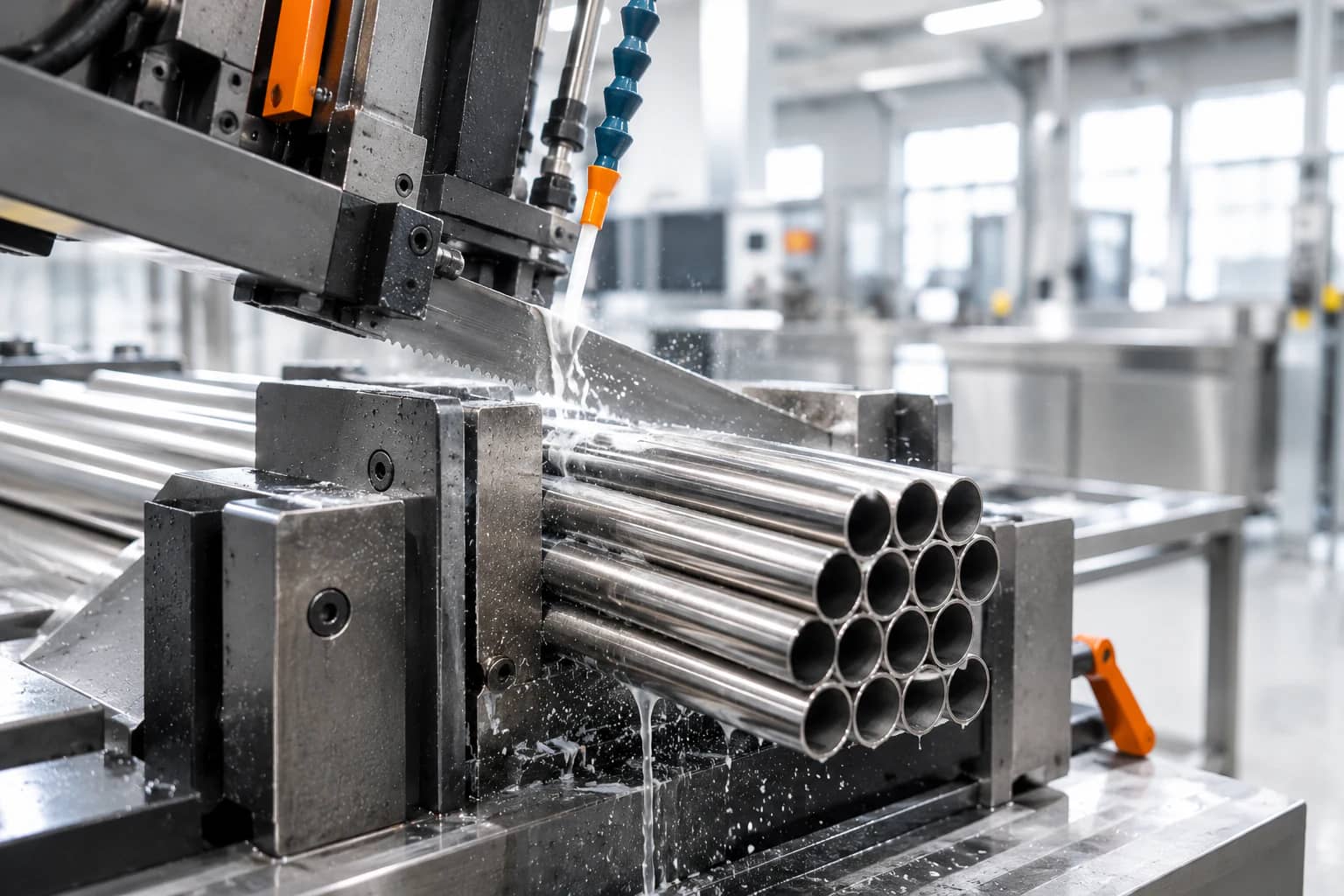
Stainless steel punishes hesitation. The moment a tooth rubs instead of cutting, the surface work hardens and every following tooth meets material harder than the last. For food-grade, chemical and marine fabricators processing stainless sections, tube and plate offcuts, blade choice and feed discipline decide whether stainless is routine or ruinous.
For most of that work the answer is high-performance bi-metal: an HSS tooth edge welded to a flexible alloy steel backing, so the edge keeps biting positively while the backing absorbs the flexing of interrupted cuts through tube and box. When the job moves to heavy solid stainless or high-nickel grades, honed carbide takes over. Every blade we sell is made to order and welded to the length you give us, so it arrives ready to fit your machine.
Recommended blades for this work
Blades on sale today that suit this work, each with the reason from its own listing. Every one is welded to your machine's length.
Bahco
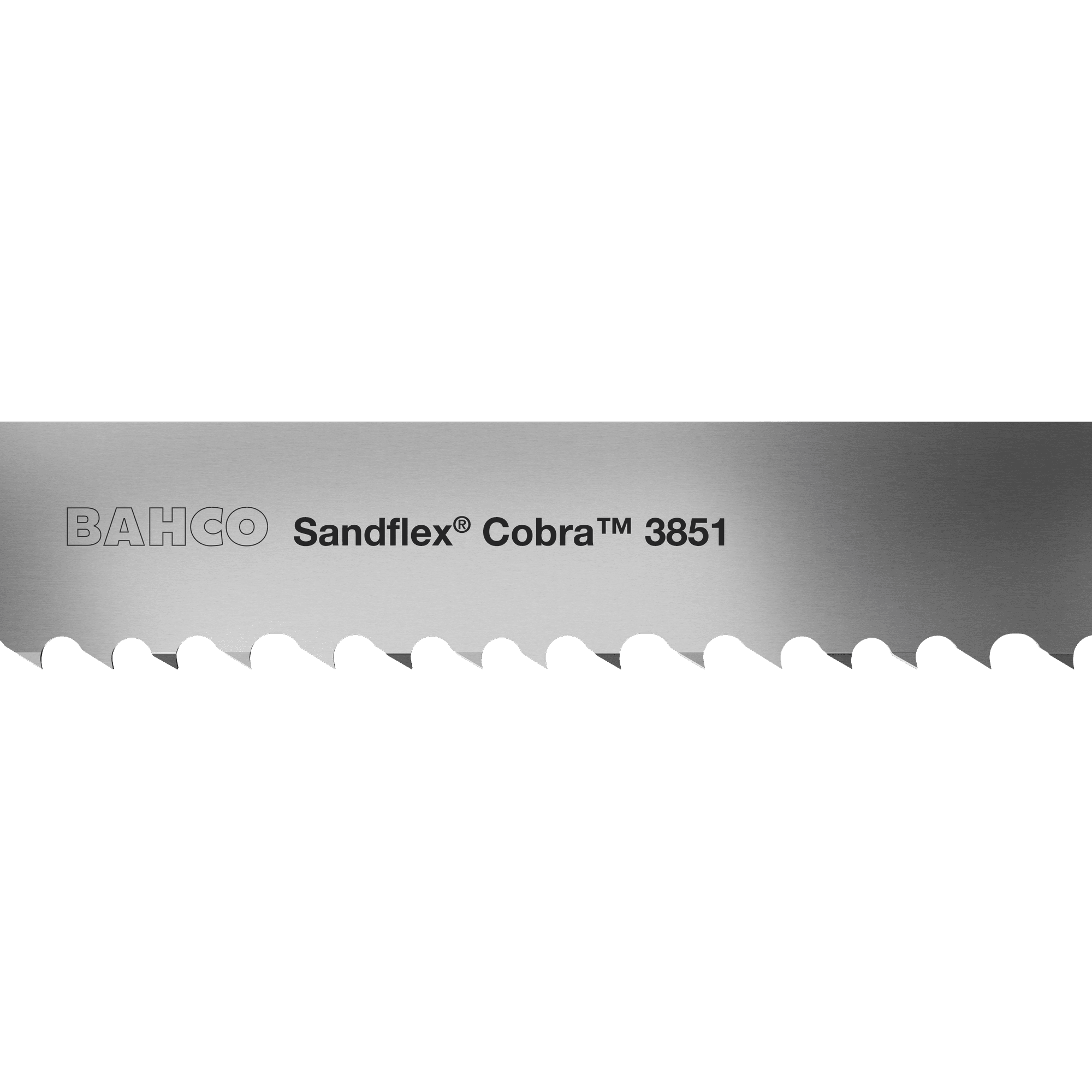
3851 Sandflex Cobra PRX Bandsaw Blade
Production bi-metal blade with an improved HSS tooth edge for high performance metal cutting.
From £13.12 ex VAT£15.74 inc VAT
Bahco
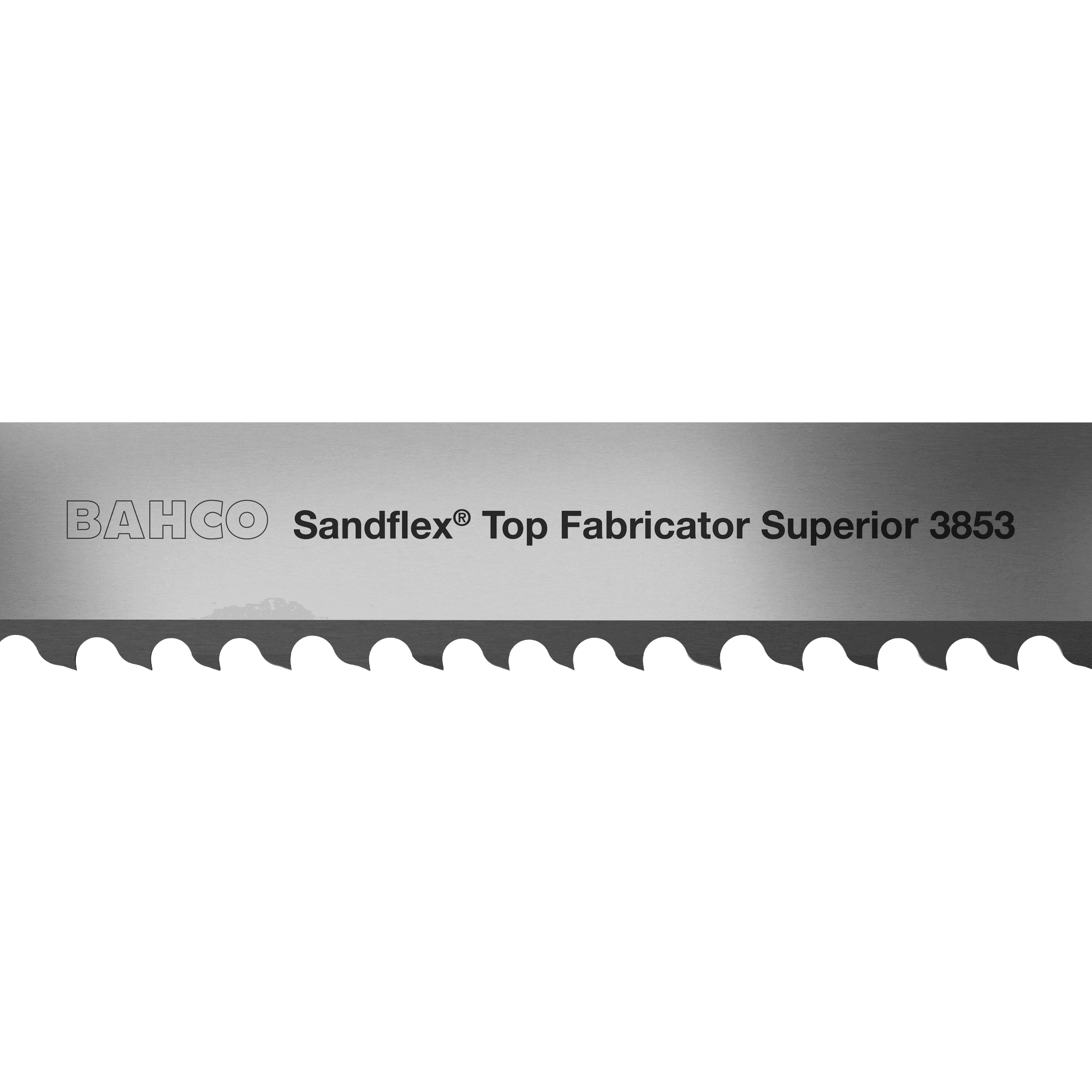
3853 Sandflex Top Fabricator PF Bandsaw Blade
Structural steel bi-metal blade for tubes, profiles and mitre cutting in fabrication shops.
From £15.77 ex VAT£18.92 inc VAT
Morse
Production M42 Bandsaw Blade
M42 cobalt HSS bi-metal blade for higher production speeds and heat resistance on alloy and stainless steels.
From £8.43 ex VAT£10.12 inc VAT
Bahco
3881 Carbide Multi Set THS Bandsaw Blade
Multi Set THS honed carbide blade for stainless steel, high-nickel-chrome and aerospace alloys.
From £40.16 ex VAT£48.19 inc VAT
Morse
Maverick Bandsaw Blade
Production and job-shop bi-metal blade for tool steels, stainless, structural shapes and tough alloys.
From £13.17 ex VAT£15.80 inc VAT
Bahco
3859 EZX Extreme Easy-Cut EZX Bandsaw Blade
Easy-Cut Xtreme EZX trimetal blade for structural and stainless steel, cast iron, high-temperature alloys and tool steel.
From £28.55 ex VAT£34.26 inc VAT
Bi-metal first, carbide for the hard end
Bi-metal blades weld a high speed steel tooth edge, commonly M42 or M51, onto a fatigue-resistant alloy backing. That combination is why bi-metal is the default in fabrication and engineering workshops: the hard edge keeps a positive bite in stainless, which is exactly what stops the surface work hardening, while the flexible backing tolerates the constant flexing of a running band. For stainless sections, tube and everyday plate offcuts a high-performance bi-metal band is the sensible first choice. It covers your mild steel and aluminium work too.
Carbide-tipped blades carry tungsten carbide tips on an alloy backing. The tips stay hard far beyond HSS temperatures, which matters when stainless work moves to the heavy or high-nickel end: large solid sections, high-nickel-chrome alloys and the demanding grades that wear a bi-metal edge fast. Step across when bi-metal blade life collapses on a particular job rather than by default, because for routine stainless sections bi-metal remains the better value. The honed Multi Set THS is the version Bahco aims at heavy stainless and high-nickel work.
On the saw table
The workpieces this industry actually feeds through a band, and what each asks of the blade.
Stainless tube and box sections
Tube and box work is interrupted cutting: the blade enters and exits a thin wall many times per cut. Every exit invites a snagged tooth. A bi-metal band with an HSS edge on a flexible backing, like the Sandflex Top Fabricator, is built for exactly this, holding its teeth through box and angle. Keep the feed positive so each tooth cuts rather than rubs, because rubbing is what starts work hardening in stainless.
Production cutting of stainless sections
When a saw runs stainless all day, blade consistency matters more than blade price. Production sawing of solid stainless sections rewards a high-performance bi-metal band such as the Sandflex Cobra, whose improved HSS edge is made for steady output on steel including stainless. Watch the first cuts of each new band: a fresh edge that bites cleanly from the start sets up the whole life of the blade.
Heavy and high-nickel work
Heavy solid stainless and high-nickel grades are where bi-metal blade life falls away fastest. The material resists the cut, the edge runs hot and each slightly dulled tooth work hardens the surface for the next. This is the point to move to honed carbide: the Carbide Multi Set THS is rated for stainless and high-nickel-chrome alloys and its tungsten carbide tips stay hard far beyond HSS temperatures.
Material guides for this industry


Deeper guidance per workpiece, including the blades that genuinely cut it and why.
From the blog
- Stainless steel processing
Choosing a bandsaw blade for stainless steel
Stainless steel work hardens under a rubbing tooth. How to choose between M42 and M51 bi-metal and carbide-tipped bandsaw blades, with TPI and coolant guidance.
- Stainless steel processing
M42 vs M51 bandsaw blades, when the upgrade pays
M42 and M51 are the two cobalt HSS grades on bi-metal bandsaw blades. What separates them, when M42 is enough and when M51 repays its higher price.
- Stainless steel processing
Breaking in a new bandsaw blade, why and how
A razor-fresh bandsaw blade micro-chips under full feed. A short break-in at reduced feed hones the edge instead and repays itself in blade life.
Frequently asked questions
Why does stainless steel work harden when sawing?
Do I need a different blade for stainless than for mild steel?
Can any of these blades be welded to fit my saw?
Tell the blade wizard your material, machine and length and it will narrow the range for you.
Start the blade wizard