

M-Factor GP Bandsaw Blade
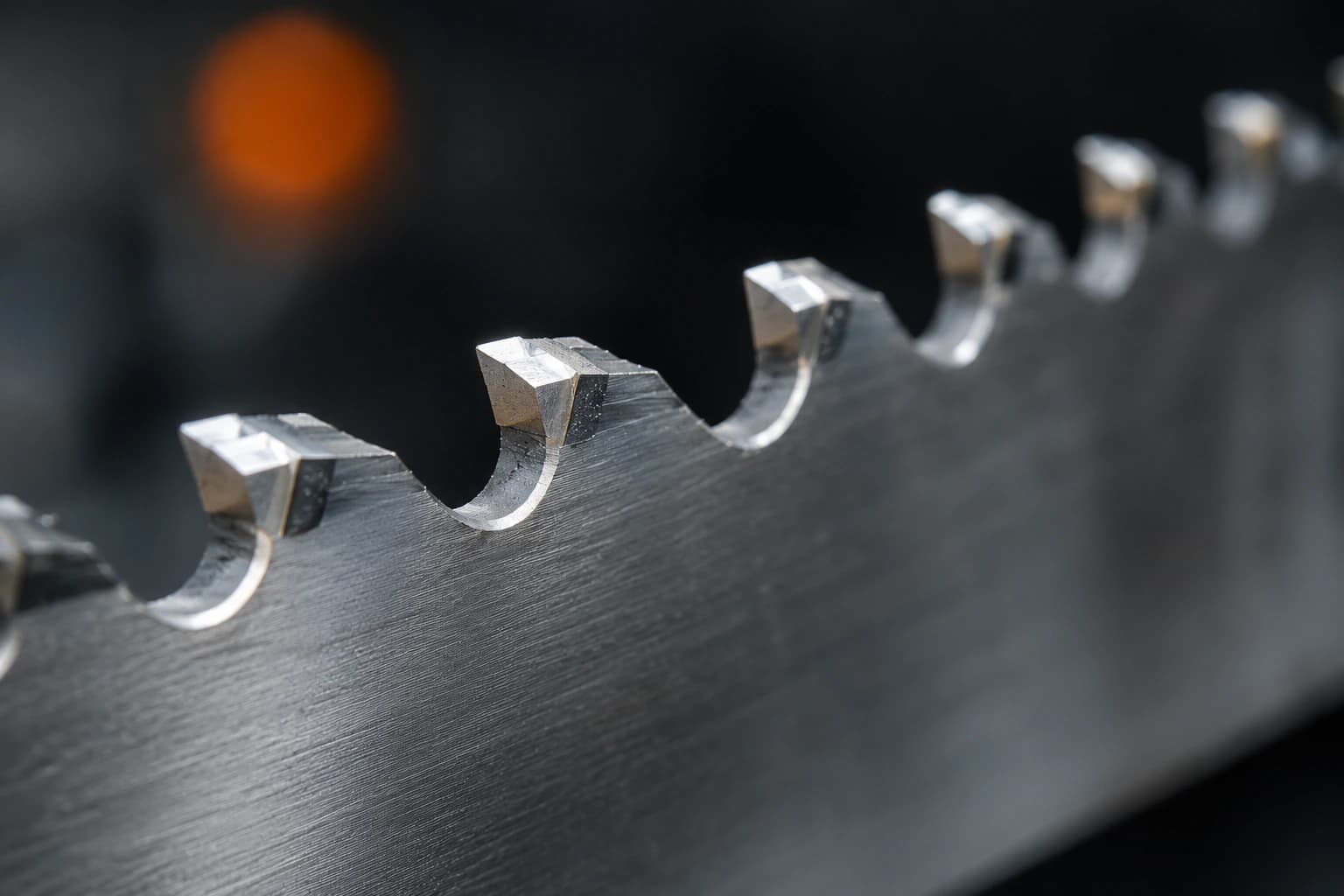
General purpose carbide-tipped blade for small ferrous billets in alloy and stainless steel.
Made to order and welded to the length you enter.
This blade
The size you have chosen above, with the range's published details.
41 x 1.3mm, 2/3 TPI
| Width | 41mm |
|---|---|
| Thickness | 1.3mm |
| TPI | 2/3 (variable pitch) |
| Pricing | By length: the band plus the weld |
| Lengths | Welded from 1,000mm to 8,000mm |
| Brand | Morse |
| Series | M-Factor GP |
| Construction | Tungsten carbide tips on an alloy backing |
| Cuts | Alloy steel, Stainless steel, Titanium, Inconel, Tool steel |
| Made in | USA (Canton, Ohio) |
| Verification source | Manufacturer product page |
Set and kerf
The set is the sideways angle given to the teeth. It makes the cut wider than the band body, so the body and the tooth edges clear the cut instead of rubbing. A wider set suits work where the cut tends to close on the blade. We do not publish a kerf or set width figure for this blade: ask us if your job depends on one.
All sizes
Every width, thickness, pitch and tooth form listed for this blade. Choose one to load it into the configurator.
| Width x thickness | 1.5/2.0 TPI | 2/3 TPI |
|---|---|---|
| 34 x 1.1mm | ||
| 41 x 1.3mm |
About this blade
The Morse M-Factor GP is the general purpose member of the M-Factor carbide family, aimed at small billets under 12 inches in ferrous materials: alloy and stainless steel, plus titanium, Inconel and tool steels. Tungsten carbide tips stay hard far beyond HSS temperatures, turning difficult billet work into routine production. Made in the USA in Canton, Ohio and welded to your machine's loop length in the UK.
Specifications come from the manufacturer's published information. If the job is unusual, talk to us before you order.
Cuts these materials
- Alloy steel
- Stainless steel
- Titanium
- Inconel
- Tool steel
Industries that use this kind of blade
Reading the TPI
TPI is the number of teeth per inch along the band. A single figure, such as 14, is a constant pitch: the teeth are evenly spaced. Two figures, such as 2/3, are a variable pitch: the spacing changes along the band between 2 and 3 teeth per inch, which breaks up vibration and lets one blade cover a wider spread of section sizes.
Read the pitch against the thickness of metal the teeth pass through. The published rule is to keep between 6 and 24 teeth in the cut: too few and each tooth takes too big a bite, too many and the gullets clog. Thick sections need a coarse pitch, thin sections and tube walls a fine one.
For tube, profiles and bundles the pitch depends on the wall thickness too. The blade finder works it out from your section and names the chart it used.
Pitch for solid sections
The published chart for solid bar, by section thickness. The rows for pitches this blade is listed in are marked.
| Section thickness | TPI |
|---|---|
| 0 to 5mm | 18 |
| 4 to 8mm | 14 |
| 2 to 15mm | 10/14 |
| 8 to 20mm | 8/12 |
| 16 to 30mm | 6/10 |
| 25 to 40mm | 5/8 |
| 35 to 70mm | 4/6 |
| 60 to 120mm | 3/4 |
| 80 to 200mm | 2/3 (listed for this blade) |
| 120 to 400mm | 1.5/2 (listed for this blade) |
| 250mm and up | 1.1/1.6 |
| 400mm and up | 0.75/1.25 |
Source: Addler (Excision) bandsaw blade tooth selection guide, corroborated by the Dakin-Flathers TPI chart. Accessed 2026-07-28. Starting recommendations from published manufacturer guidance, not guarantees. Tune at the machine.
How it compares in carbide-tipped blades
The nearest products in this range, compared on what the manufacturers publish. The from price is the lowest listed price for each product.
| Consideration | This product | 3859 EZX Extreme Easy-Cut EZX Bandsaw Blade | 3860 TMC TMC Bandsaw Blade | 3881 Carbide Multi Set THQ Bandsaw Blade |
|---|---|---|---|---|
| Range code | Not listed | 3859 | 3860 | 3881 |
| Construction | Tungsten carbide tips on an alloy backing | Tungsten carbide tips on an alloy backing, some further coated | Tungsten carbide tips on an alloy backing, some further coated | Tungsten carbide tips on an alloy backing, some further coated |
| Cuts | Alloy steel, Stainless steel, Titanium, Inconel, Tool steel | Structural steel, Mild steel, Stainless steel, Cast iron, High-temperature alloys, Tool steel | Titanium, High-temperature alloys, Stainless steel, Aluminium | Titanium, Aerospace alloys, Stainless steel, High-nickel-chrome alloys, Tool steel |
| Edge and tooth notes | Not listed | Trimetal construction | Unset multi-chip carbide teeth | Multi Set carbide teeth |
| Widths | 34mm to 41mm | 27mm to 67mm | 41mm to 67mm | 34mm to 67mm |
| Price | From £35.61 ex VAT, £42.73 inc VAT | From £28.55 ex VAT, £34.26 inc VAT | From £38.87 ex VAT, £46.64 inc VAT | From £38.87 ex VAT, £46.64 inc VAT |
Frequently asked questions
When is a carbide-tipped blade worth the extra cost?
What is the difference between set and unset carbide blades?
How do I measure the blade length my machine needs?
Can I order a length outside the range shown?
Full measuring instructions are in our guide, How to measure a bandsaw blade length, and on the custom lengths page.
Need a different blade or a different length? Price any blade we list at the exact loop length your machine takes.
Price a custom length