
Carbon steel or bi-metal bandsaw blades for wood?
Carbon steel is the honest default bandsaw blade for wood, ply and non-ferrous work. Here is what it does well and when bi-metal earns its higher price.
The Bandsaw Store team
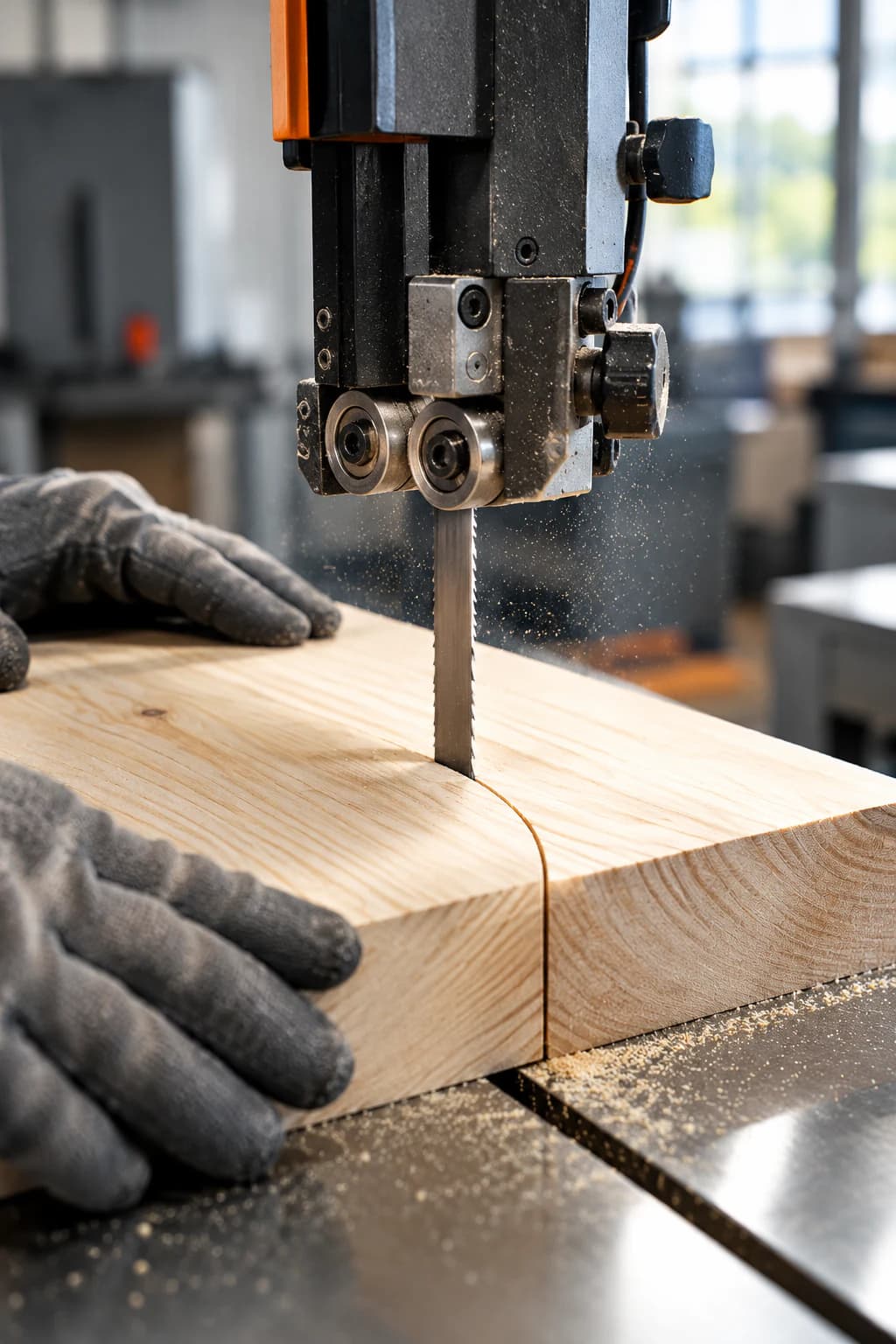
For most wood cutting, carbon steel is the right blade: sharp, cheap and easy to live with across timber, ply, MDF and non-ferrous metals. Bi-metal earns its higher price in specific situations, namely abrasive or mixed work, reclaimed timber with nail risk, higher band speeds and long production runs where blade changes cost more than blades. Start with carbon and upgrade for a reason, not by default.
What carbon steel gives you
A carbon steel blade is one material through and through: a hardened carbon steel band with the teeth cut straight into it. That simplicity is its strength. The teeth take a very keen edge, the band is inexpensive to make and every part of the blade cost goes into cutting wood rather than surviving conditions a wood shop never sees.
Carbon blades come in two constructions. Flexback has a hardened tooth edge on a softer, flexible back, which tolerates smaller wheels and suits contour and general workshop cutting. Hardback is hardened through the back as well, giving higher beam strength so the blade resists deflection and cuts straighter under feed pressure, which is what you want for resawing and deep ripping. Both are covered in detail on our carbon steel blades page.
On softwood, hardwood, ply, chipboard, MDF, plastics and non-ferrous metals such as aluminium and brass, a carbon blade in the right pitch does everything most workshops ask. When it dulls, you swap it, and because the blade is cheap, swapping early is painless. A fresh carbon edge frequently outcuts a tired premium one.
What bi-metal adds
A bi-metal blade welds a high speed steel tooth edge onto a fatigue-resistant alloy backer. HSS holds its hardness at temperatures that would soften a carbon edge, and it wears far more slowly on abrasive material. Wood-cutting bi-metal blades pair that durable edge with wood tooth geometry, so you get carbon-style cutting behaviour with several times the edge life on punishing stock.
For a wood user, that buys three things. First, edge life on abrasive material: dense tropical hardwoods, dry oak, resin-bonded panels and reclaimed boards full of grit all round over a carbon edge quickly. Second, tolerance of higher band speeds and heavy duty cycles, where a carbon edge runs hot and gives up early. Third, survival against the occasional hidden nail or staple. A nail strike that strips teeth off a carbon blade is often just a scar on a bi-metal one. If nails are not occasional but constant, as in pallet work, that is its own category: see pallet dismantling blades.
The comparison for wood users
| Question | Carbon steel | Bi-metal (wood geometry) |
|---|---|---|
| Price per blade | Low | Noticeably higher |
| Edge sharpness when new | Excellent, very keen | Very good |
| Edge life on clean softwood and ply | Good | Longer, but rarely worth the premium |
| Edge life on abrasive hardwood and panel | Shorter | Several times longer |
| Hidden nails and staples | Often fatal to the tooth line | Usually survivable |
| High band speeds and long shifts | Edge runs hot and dulls faster | Holds up |
| Best suited to | General workshop, joinery, contour work, frequent blade changes | Production resawing, abrasive stock, mixed and reclaimed timber |
Read the middle rows honestly. On clean softwood a bi-metal blade lasts longer too, but a carbon blade is cheap enough that longer life does not pay for the price difference. The premium only converts into savings when the material is actively eating carbon edges.
When to spend the extra
Upgrade to bi-metal when at least one of these is true of your workshop. You resaw abrasive hardwoods or dense panel products all day and carbon blades are dulling within a shift. You cut reclaimed or site timber where a nail is a matter of when, not if. You run a production machine at high band speed for long stretches, where blade changes interrupt output and a tired edge shows up as wander and burn marks. Or you cut a genuine mix of wood and non-ferrous or light ferrous work on one machine and want a single band that handles all of it.
In joinery and furniture workshops the usual pattern is both: carbon blades in several pitches for daily bench work and a bi-metal band on the resaw where the volume is. That is not indecision, it is matching blade cost to duty.
The honest default
If you are setting up a wood shop or replacing a mystery blade that came with the machine, buy carbon steel first. Choose flexback for general and contour work, hardback for resawing, get the pitch right for your stock thickness and put the savings into a spare blade so a dull edge never keeps you cutting badly. You will know within weeks whether your work is hard enough on edges to justify bi-metal, and the upgrade path is simple because both are welded to the same loop length your machine already takes.
And if your ambitions run past wood into steel, that is a different conversation about edge materials entirely: start with our guide to bi-metal vs carbide blades.
The Bandsaw Store team
Technical points follow general engineering practice and the manufacturers' published ranges. If a question is not answered here, ask us directly.